Did you sign up for our weekly newsletter on 'From Lock to Liberation' yet? JOIN US HERE.
JOURNEY WITH KINDRED SOULS
Together, we'll explore the intersection of nervous system science, mental health, spirituality, and healing.
Why Your Doctor Might Be Missing the Root Cause of Your Chronic Illness
Why Your Doctor Might Be Missing the Root Cause of Your Chronic Illness
Listen to the conversation
The Medical System Has a People Problem. One Doctor Is Doing Something About It.
There's a reason so many people dread going to the doctor. Not because of what they might find out, but because of how they might be treated while they find out. Dismissed. Rushed. Handed a diagnosis without context, a prescription without a conversation, and a follow-up appointment they'll wait months to get.
It doesn't have to be this way. And Dr. Georgia Tetlow, MD, is proof.
Dr. Tetlow is the founder and CEO of Philadelphia Integrative Medicine, a national clinical mentoring site she's been running since 2009. She's board-certified in both integrative medicine and physical medicine and rehabilitation, a certified practitioner with the Institute for Functional Medicine, and a clinical professor at Sidney Kimmel Medical College.
She joined me on The Spiritually Curious Therapist to talk about what it really means to practice medicine with the whole person in mind, how she's training other clinicians to do the same, and why she kept a somatic therapist by her side every week for an entire decade.
A Physician Who Entered Conventional Medicine on Purpose
Before Dr. Tetlow was a physician, she was a yoga teacher and yoga therapist. She loved the body and its capacity for healing. But she also recognized that breathing through symptoms isn't always the right answer. Sometimes people need a workup. Sometimes what looks like tension is actually an autoimmune disease.
So she chose medicine. Not naturopathy. Not an alternative certification. She went straight into an MD program at UNC Chapel Hill, knowing full well that the training she'd receive wasn't designed around her values.
'I wanted to keep myself and my values,' she told me. 'It wasn't like something that happened during the training. It was something I worked hard to keep contact with throughout the whole process.'
She completed four years of medical school, four years of residency, and two years of fellowship before launching her clinic. And for all of it, including the years before she even started medical school, she worked weekly with a somatic therapist.
What Med School Culture Actually Does to People
Dr. Tetlow didn't mince words when I asked her what it was like to hold onto her values inside a training environment that wasn't built for them. She called medical school a cultural experience. One where shaming is considered normal. Where verbal abuse on the medical floor has its own unspoken rules. Where people learn to ignore their bodies, their feelings, and their needs in service of the system.
'I wouldn't say the work I did personally was in opposition,' she said. 'I would say it was keeping and nurturing and watering the threads and the roots to my own awareness. Like, let me stay, continue to acknowledge and be strong in reflecting on and experiencing what I want to take from it and what I don't.'
The somatic therapy wasn't a crisis response. It was an intentional practice. She was choosing, every single week, to remain in her body while a culture was teaching her to leave it behind.
For those of us in the helping professions, that choice looks familiar. It's the same thing we talk about with our clients. And with ourselves.
The Problem With How Conventional Medicine Handles Chronic Illness
One of the most striking moments in our conversation came when Dr. Tetlow explained what her clinic does differently when it comes to thyroid disease.
Four out of five people with hypothyroidism have it because they have an autoimmune condition called Hashimoto's thyroiditis. But most conventional practitioners never check for the thyroid antibodies that would confirm this. They see a low thyroid number, hand over a prescription, and schedule a lifetime of monitoring appointments.
What they're not doing is asking why. And in functional and integrative medicine, the why changes everything.
'If someone starts to have an autoimmune disease,' Dr. Tetlow explained, 'that means their immune system is dysregulated, and there's usually a reason for that.' That reason might live in the gut. It might be connected to inflammation markers. It might be rooted in microbiome imbalance, poor digestion, or dysbiosis that's quietly driving the whole picture.
Her clinic runs a comprehensive diagnostic stool study to look at the immune environment in the gut, checks inflammation markers, and uses specialty testing that isn't yet standard in conventional care but is CLIA-validated and independently verified to produce reliable results.
The outcome? They resolve a case of Hashimoto's thyroiditis every single week.
Healing Happens in Relationship, Not in Charts
There's a thread that runs through everything Dr. Tetlow shared, and it comes down to this: healing doesn't happen when you know. It happens when you feel enough nervous system support to actually be different.
That's not her being soft on science. That's her describing what she has seen in clinical practice for over two decades. You can give someone every test result, every protocol, every answer. If they walk out overwhelmed, afraid, or disconnected from the person who just handed them that information, nothing changes.
She described a recent patient encounter, a young man with his parents in the room, who had been told months earlier that he had ulcerative colitis. Nobody explained what that meant. Nobody offered a next step. He was in abdominal pain seven out of ten, around the clock, and had simply moved on and hoped for the best.
That's not a failure of the patient. That's a failure of the system. And it's the kind of failure Dr. Tetlow has built her entire clinic to prevent.
At Philadelphia Integrative Medicine, appointments are long enough to actually hear a person's story. Intake happens before the appointment. Practitioners prepare. They read. They show up ready to be present. And then they adjust in real time, because, as she put it, 'the art is not overwhelming them, not overwhelming yourself as a practitioner, and making sure the nervous system is still in a learning state.'
What Practitioner Self-Care Actually Has to Do With Patient Care
One of the most powerful parts of this conversation was when we shifted to talking about clinicians. Because Dr. Tetlow isn't just treating patients. She's training practitioners. And she's deeply aware that the state of the person doing the work matters as much as the tools they're using.
She told me that at certain points in her mentoring career, forty percent of the conventionally trained physicians she worked with disclosed that they went entire twelve-hour shifts without eating, drinking, or using the bathroom. Surgeons who gown in and don't gown out for six hours at a time. Clinicians whose bodies learned to have no needs, and who carried that pattern home, into their marriages, their parenting, their nervous systems.
That's not dedication. That's dysregulation dressed up as professionalism.
Her clinic uses structured self-assessments every six months. They ask about sleep, eating, movement, relationships, and even sexual health and pleasure, areas that are always the first to disappear when someone is operating from a place of chronic stress. And they take the results seriously.
'The self-regulation is something that can come forward and be managed much better in a therapeutic relationship with someone who cares,' she said. 'And then we're much more likely to be able to shift because we're being seen.'
For those of us in therapy and healing spaces, that is not a new idea. But hearing it articulated by a physician, about physicians, inside a medical practice? That's still rare. And it's important.
Where Functional Medicine Is Headed and What It Means for All of Us
I asked Dr. Tetlow where she sees integrative and functional medicine going, especially with AI becoming more embedded in healthcare. Her answer was clear: the future has to center humans. Both the patients and the practitioners who care for them.
AI can read test results. It can generate likely conclusions. What it cannot do is read the room. It cannot notice that a 25-year-old's parents are in the room and adjust the conversation accordingly. It cannot sense that someone's nervous system is flooded and choose to slow down. It cannot sit in the uncertainty with someone the way a human being can.
'Healing and changing doesn't happen when you know,' she said. 'It happens when you feel enough nervous system support to actually be different.'
That's the whole thing. That's what every modality we work with, every approach we bring into our practices, every conversation we have with our clients is trying to create. Not more information. Enough safety to change.
Dr. Tetlow is building that in a medical setting. And she's teaching other clinicians to do the same.
Where to Find Dr. Georgia
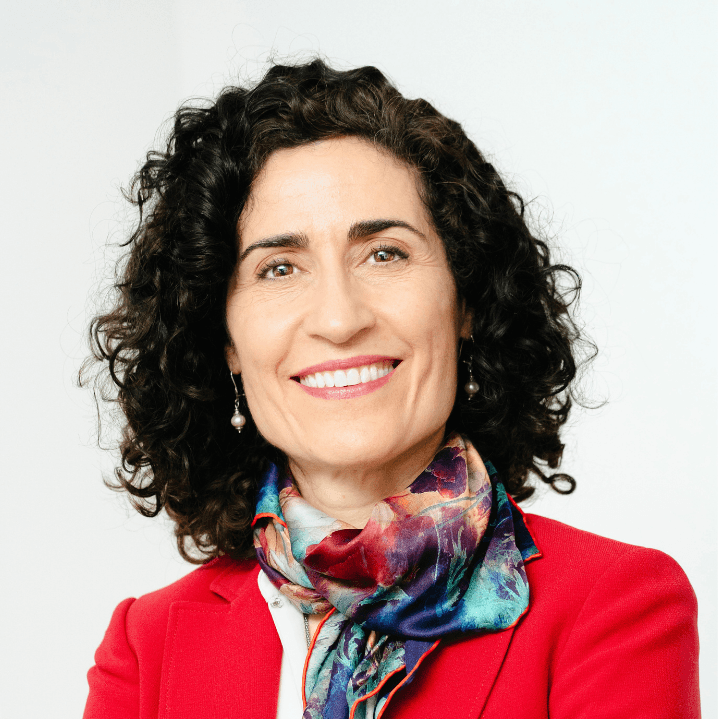
Dr. Georgia Tetlow, MD, ABOIM, ABPMR, FMCP-M, is a board-certified physician in integrative and functional medicine and founder of Philadelphia Integrative Medicine.
She's been practicing since 2009, runs a national clinical mentoring program for other healthcare providers, and has built her entire clinic around one radical premise: patient care comes first. Not the bottom line. Not the payer system. The patient.
If you're a patient looking for integrative and functional medicine support, or a clinician who wants to learn how to integrate these approaches into your own practice, you can find Dr. Tetlow at philly-im.com.
She offers free consults for both patients and clinicians, a provider training tab for mentoring inquiries, and a monthly Healthcare Workers and Integrated Professionals group that has been running since 2015. The first Monday of each month at lunchtime.
You can listen to my full conversation with Dr. Tetlow on The Spiritually Curious Therapist.
SUBSCRIBE TO OUR WEEKLY THURSDAY NEWSLETTER
A weekly newsletter for people who are tired of understanding their patterns and still feeling stuck.