
Did you sign up for our weekly newsletter on 'From Lock to Liberation' yet? JOIN US HERE.
JOURNEY WITH KINDRED SOULS
Together, we'll explore the intersection of nervous system science, mental health, spirituality, and healing.
How Hypnotherapy Works With the Subconscious Mind to Shift Old Beliefs
How Hypnotherapy Works With the Subconscious Mind to Shift Old Beliefs
Listen to the conversation
So many of the people I work with already understand their patterns. They can tell me where a habit came from, why it shows up, and what it's probably protecting. And still, they feel stuck.
That gap between knowing and changing is something I think about a lot, so I was excited to sit down with Nelson Whiting on The Spiritually Curious Therapist. Nelson is a clinical hypnotherapist who has spent years helping people get underneath the habits they can't seem to shake. We started with the technical side of how hypnosis works and ended up somewhere much more spiritual, which is my favorite kind of conversation.
How a High School Anatomy Class Led Nelson to Hypnosis
Nelson's path into this work started long before he knew what hypnosis was. Like a lot of us, he stumbled into something powerful while looking for something else. His story is a good reminder that our minds can do far more than we usually ask of them.
The Breathing Trick That Changed His Test Scores
When Nelson was a senior in high school, he was taking an anatomy class that required him to memorize a ton of medical terms. He wanted an easier way to get good grades, and his cousin handed him a book with a simple five-minute practice. It was box breathing, followed by a few affirmations like "I'm a phenomenal learner."
He started doing it before every study session, and he began scoring 100% on his tests with very little study time. The top students in his class couldn't figure out what he was doing. Looking back, Nelson realized he had been teaching himself a form of self-hypnosis, slowing down and dropping into a focused, flow-like state.
Falling Out of a Chair in Front of 300 People
On the last day of his senior year, a stage hypnotist came to entertain the students at an all-night party. Nelson volunteered and sat on stage with 39 other students while the hypnotist walked them through a relaxation process.
Nelson relaxed so deeply that he fell right out of his chair and smacked his head on the wooden stage. The whole audience gasped. But Nelson felt no pain at all. He described lying there in a blissful, euphoric state, so relaxed that he stopped responding to anything the hypnotist asked him to do.
As someone trained in pain reprocessing therapy, this part caught my attention. So much of my work with chronic pain centers on how the brain reads safety and threat. Nelson's experience on that stage was a vivid example of how much a deeply relaxed state can change what we feel.
Why Insight Alone Doesn't Change Unwanted Habits
This is the question that brings so many people into therapy. They have plenty of awareness, and they still can't stop. Nelson explained it in a way I really appreciated.
He sees most unwanted habits as a conflict between two parts of us. One part has a clear, logical goal. Another part, the part running memory, imagination, and emotion, is running an older program that says something else entirely. When those two are at odds, willpower doesn't stand much of a chance.
Why Coping Strategies Can Keep You Stuck
Nelson shared that many of the people who come to him have already tried the standard approach. They remove the trigger, like getting rid of a smartphone or blocking certain websites. Or they try to change their response to the urge, like doing pushups or singing church hymns in their head.
He joked that some people do this so well that they memorize the whole hymnbook and get ripped from all the pushups, and they still have the same problem. To Nelson, coping means fighting, and if you're still fighting, you're still in survival mode. The deeper issue hasn't been addressed yet.
I love this because it takes so much blame off people. If you've been white-knuckling your way through a habit, it doesn't mean you're weak. It may simply mean the work hasn't reached the level where the habit actually lives.
What the Subconscious Mind Is Really Doing
We throw the word "subconscious" around a lot in therapy, energy work, and wellness spaces. I asked Nelson to slow down and explain what he actually means by it. His answer gave me a helpful way to picture it.
Nelson described the outer layer of the brain as the home of our conscious thinking. Everything deeper runs automatically, like our heartbeat, digestion, and blinking. Those deeper parts also hold our beliefs, our emotional memories, and the programs we run without noticing. The goal of hypnotherapy, as he put it, is to help people become consciously aware of what's been running beneath the surface so they can do something about it.
The Loneliness That Felt Like a Bottomless Pit
Nelson told me about a psychologist who came to him for help with her weight. She knew exactly what she was supposed to do and couldn't understand why it wasn't working.
In session, she went back to a memory from when she was about five years old. She was alone on the playground, wishing she had friends, and the loneliness completely overwhelmed her. While in that state, she described it as insatiable and like a bottomless pit. She hadn't connected that feeling to her eating with her logical mind, and it only clicked for her after the session.
What struck me was how Nelson approached it. He said he has to be careful not to connect the dots for people, because that can get in the way of their own processing. He lets them have their experience and trusts that they already hold the answers.
Why Safety Comes Before Change
This part of the conversation lined up so closely with how I practice. Nelson talked about the amygdala, the part of the brain that scans for danger. He made the point that it doesn't keep us safe in some universal way. It responds based on what our past experiences have taught it to fear.
He gave the example of Alex Honnold, the rock climber who free-solos huge cliffs. Something that would flood most of us with fear barely registers for him. Our threat systems are personal, shaped by our own histories.
Nelson also shared something Dr. Joe Dispenza says often, that trying to solve a problem from inside a disturbing emotion tends to make it worse. I think about it this way. When we try to fix ourselves from a place of fear, we end up reinforcing the fear. That's why so much of my work starts with helping the nervous system feel safe enough before we go anywhere deeper.
Why Your Symptoms Are Messengers Worth Listening To
I asked Nelson whether he sees the same core beliefs come up again and again. He didn't hesitate. After thousands of sessions, he said nearly everything leads back to some version of the same thing.
He hears "I'm not good enough," "I'm unworthy," "I don't deserve happiness," and "There's something wrong with me." He sees shame as the emotion beneath all of them, even when people call it hopelessness, sadness, or despair. Shame tells you that you're broken, that you're the only one with this problem, and that you should hide it. That isolation only makes things heavier.
Drilling Down From Behavior to Identity
Nelson described a helpful way to think about where a habit really comes from. At the top is the behavior, which is just the symptom. Underneath that is the emotion driving the behavior. Below the emotion are the thoughts we keep replaying.
Below those thoughts are the beliefs that keep them going, and at the very bottom are beliefs about who we are. He shared that even when his students pick something small for a class demo, it almost always leads back to an identity belief. I see this in my own practice too. The small things are rarely small.
The Toddler Learning to Walk: A Kinder Way to See Your Mistakes
When I asked Nelson why these painful beliefs are so common, he brought in his Christian faith and his background in philosophy. He talked about how we're always comparing ourselves to some ideal and feeling bad about the distance. That comparison can slide into perfectionism and a constant fear of failure.
Then he offered an image I haven't been able to stop thinking about. Picture a little kid learning to walk who keeps falling down. None of us would ever look at him and say he's bad. We'd see a child who just hasn't learned it yet, and every fall is helping him get there.
Nelson suggested we look at our own struggles the same way. So often, we're beating ourselves up for not knowing something we were never taught.
Finding the Third Option
Nelson pointed out that the brain tends to think in black and white, good or bad, on or off. He described the heart as more open, more willing to ask whether there might be a third option.
This reminded me of a mentor of mine who used to say there's option A, option B, and option C, which is the one we don't even know exists yet. It also connects to what we know about how the brain constantly predicts what's coming. When we're in fear, those predictions get very narrow. I love the practice of asking, "What is my brain predicting right now, and what else is possible?"
Nelson added that the unknown is the only place we can actually solve our problems, because if we already knew the answer, we wouldn't be stuck. Stepping into that unknown takes vulnerability and faith. And as he put it, sometimes we get hurt, and then we heal, and that's how we grow.
A Simple Paper Exercise to Move From Stress to Peace
Nelson shared a tool anyone can try at home. It's based on an approach from John Overdurf called ADAC, which stands for activate, dissociate, activate, collapse. It only takes about five to ten minutes.
Start by thinking of something that's bothering you. On a piece of paper, write down every negative thought and feeling you have about it. Don't worry about spelling or grammar. Just let it all pour out. Then tear that paper up, which helps you put some distance between you and the problem.
Next, grab a fresh sheet and write only what's positive and true. Nelson likes to start with the words "The truth is." Then ask yourself questions like, what did I learn from this? How does this make me a better person? How might I respond differently next time? Keep going until you feel yourself shift from stress toward peace.
Nelson said this kind of practice can help people clear out a lot on their own. When someone is truly stuck and can't find the root, that's often when it helps to bring in support.
Why Affirmations Work Best After the Deeper Work
Near the end of our conversation, Nelson talked about affirmations, and I think his take is really useful. If you stand in the mirror saying "I'm amazing and joyful" while part of you doesn't believe it, you can end up feeling even more divided.
Nelson sees affirmations as maintenance tools. Once you've done the deeper work and truly believe something on the inside, affirmations help you keep it strong. Before that, they can feel like another fight.
He also shared what makes someone ready for this kind of change. They need to see the problem, want to fix it, and have hope that it can be fixed. And often, they've reached a point where the pain of staying the same feels worse than the pain of doing something about it.
Listen to the Full Episode With Nelson Whiting
This conversation covered so much, from hypnosis on a high school stage to shame, faith, and the gentle way we can learn to see our own mistakes. If you've ever felt stuck in a pattern you understand but can't seem to change, I think you'll find something here for you.
And if you're ready to go deeper into understanding what your patterns have been protecting, my signature course, From Lock to Liberation, was built for that journey. You're welcome to explore it at your own pace.
WHERE TO FIND OUR GUEST
Meet Nelson Whiting
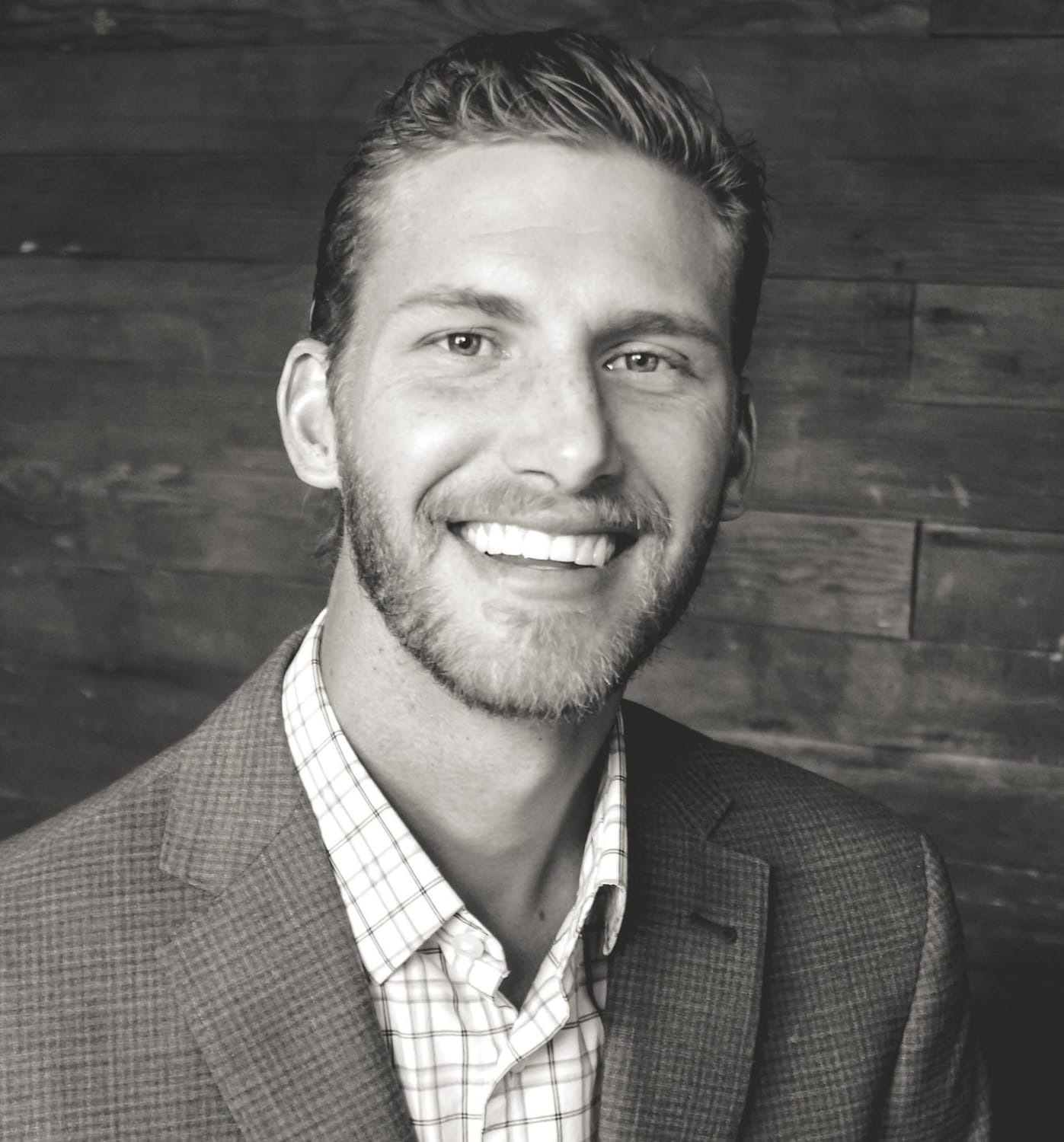
Nelson Whiting is a certified clinical hypnotherapist and the founder of No Limits Hypnotherapy. He's a certified instructor with the National Guild of Hypnotists and runs the Certified Clinical Hypnotherapy School, where he trains therapists, counselors, Reiki practitioners, massage therapists, and other healers.
Over the years, Nelson has done about 4,000 sessions focused on unwanted habits, impulse control, identity, and breaking free from shame.
Before hypnotherapy, Nelson played Division 1 tennis, earned a degree in philosophy, taught seminary, and worked in real estate. He's also the author of Your Problem Isn't Pornography: The Truth That Will Save You From Yourself at the Speed of Thought. You can learn more about his work, his school, and his clinic at nolimitshypnotherapy.com.
SUBSCRIBE TO OUR WEEKLY THURSDAY NEWSLETTER

A weekly newsletter for people who are tired of understanding their patterns and still feeling stuck.