Did you sign up for our weekly newsletter on 'From Lock to Liberation' yet? JOIN US HERE.
JOURNEY WITH KINDRED SOULS
Together, we'll explore the intersection of nervous system science, mental health, spirituality, and healing.
Why Being Self-Centered Might Actually Be the Most Spiritual Thing You Can Do
Why Being Self-Centered Might Actually Be the Most Spiritual Thing You Can Do
Listen to the conversation
Listen to the conversation
What Spiritual Sensitivity Really Means (And Why It's Not a Problem to Solve)
Before this episode went live, I sat with a question for longer than usual: how do I introduce a guest whose story includes receiving a voice from God, experiencing instantaneous physical healings, and developing what he describes as telekinetic influence over the elements?
The honest answer is, I didn't try to resolve it. I just invited curiosity.
Michael Monk is a healer, teacher, and founder of the Avatar Energy Mastery Institute, and his path began in 1999 with what he describes as a direct, unmistakable communication from God, followed by experiences that completely reorganized how he understood reality. What he has built since then is a framework for spiritual development that thousands of people have used to expand their perception, heal their bodies, and step into a more meaningful relationship with consciousness.
I brought him on The Spiritually Curious Therapist because the themes that run through his work, sensitivity, suffering, purpose, self-care, and the nervous system's role in spiritual experience, are the same themes I work with every day as a therapist and nervous system practitioner. What came out of our conversation surprised me in the best way.
Here is what I'm still sitting with.
When Sensitivity Gets Misread as Mental Illness
Michael was hospitalized more than once early in his spiritual development, not because he was mentally unwell, but because his family didn't know what to make of what he was experiencing. Doctors couldn't find anything clinically wrong. They just told his family they were witnessing something they didn't have a framework for.
That story is more common than most people realize.
Highly sensitive people, those who feel more deeply, pick up on things others miss, get overwhelmed in environments that others move through easily, are routinely misread. The experiences get labeled. The sensitivity gets pathologized. And the person is left trying to make themselves smaller or less aware, instead of learning how to work with what they have.
Michael's reframe is one I find genuinely useful: sensitivity is not a flaw. It's an expanded range of perception. And like any instrument, it works better when you understand how it functions. He described it as the difference between a jazz musician who plays by ear and a classically trained composer. Both have the gift. Only one has the theory to go with it.
When you learn the how and the why behind what you're experiencing, you find the dial. You can turn it up when you want access to that perception, and turn it down when you need to get through your day.
For the helpers, therapists, and healers reading this, I want to name something. Many of you came to this work because you feel things others don't. You picked up on energy in the room before anyone said a word. You knew something was wrong before there was any evidence of it. That didn't go away when you got licensed. It probably got more refined. And the invitation here is to stop asking that part of you to quiet down, and start learning how to work with it.
The Nervous System as a Spiritual Doorway
This is where Michael's framework and my own clinical work overlap in a way I find fascinating.
He describes the physical body and nervous system as the mechanism through which spirit becomes exposed to greater densities of experience. In his framework, we are consciousness dwelling in a body that allows us to perceive the world as physical matter, an incredible feat of translation happening through our nervous systems at every moment.
What I hear in that, through my clinical lens, is something I've been saying in a different language for years: the nervous system holds far more than we give it credit for. It is not just a survival mechanism. It is a living record of every experience you've ever had, every relationship, every moment of threat or safety, every loss and return. When we work with the nervous system gently and respectfully, what opens up is not just regulation. It's access. Access to memory, to meaning, to parts of ourselves we didn't know we'd shut down.
Michael talks about spiritualizing your physical experience through practices that expand consciousness and reduce the dominance of the five-sense world. I talk about creating enough nervous system safety that the body can release what it's been protecting. We are describing different entry points to the same territory.
Pain Is Not the Enemy
One of the most striking moments in our conversation came when Michael talked about pain.
He said that pain, physical and emotional, is the exact energy needed to heal, being delivered directly to the person who needs it. That when we can turn toward pain with curiosity and consciousness instead of fear and avoidance, there is a point where it transforms into something else entirely.
This is not a new idea in trauma-informed care. Pain reprocessing therapy, which I incorporate into my own practice, is built on the understanding that much of what we experience as chronic pain is the nervous system's continued protective response to perceived threat. When we shift our relationship to that signal, from fear to curiosity, from urgency to presence, the signal often changes.
But Michael takes it further, into territory that I find worth sitting with even if you don't land where he does: that there is a universal response to human pain, and that response is love. That every time we cry out, the universe answers. And that we often just can't feel it because we're too locked inside the nervous system's protection to receive it.
Whether you hold that as a spiritual truth or a metaphor for what happens when we finally allow ourselves to be supported, I think there is something real in it.
Why Self-Centeredness Might Actually Be the Goal
I want to spend some time here because this is the moment in the episode that I keep coming back to.
Michael made a distinction between his primary and secondary purposes. His primary purpose, he said, is his own fulfillment, his love, his connection to God, his own aliveness. His secondary purpose is the work he does in the world.
When I pushed on that, he said something I've been sitting with ever since: is there a better place to be centered than in yourself? If you're centered outside yourself, you'll fall over.
He went on to say that service should be symbiotic, not sacrificial. That when we give from a place of depletion, we're not actually giving, we're taxing ourselves. And that the most powerful thing we can do for others is to fill ourselves so completely that what we share is genuine overflow.
For therapists, coaches, healers, and helpers, this is a message that lands differently than it might for someone outside this world. We were trained to put the client first. We were socialized to believe that our own needs come second. And many of us carry a quiet belief that rest, pleasure, and filling ourselves up are luxuries we'll get to when the work is done.
The work is never done. That's the trap.
What Michael is pointing to, and what I see borne out in my clinical work every day, is that the most regulated practitioners are the ones who give best. Not because they know more or try harder, but because they have more to give from. Their nervous systems are more settled. Their presence is more consistent. And their clients feel it, even when nothing is explicitly said.
Tending to yourself is not selfish. It is, in the most practical and measurable sense, the foundation of sustainable care.
I introduced this episode with an invitation to listen with curiosity rather than certainty. I want to close this post with the same.
You don't have to believe everything Michael shares to find something valuable in this conversation. I don't ask you to. What I do ask is that you stay open to the threads that run through the stranger parts of his story: the thread of a sensitive person who was told he was broken and found out he wasn't. The thread of someone who suffered deeply and turned that suffering into purpose. The thread of someone who learned that you cannot pour from an empty vessel, and built his entire life around filling himself first.
Those are not unusual stories. They are human ones.
And they are worth your curiosity.
Listen to Episode 58 of The Spiritually Curious Therapist wherever you get your podcasts, or watch the full conversation on YouTube.
Where to Find Michael
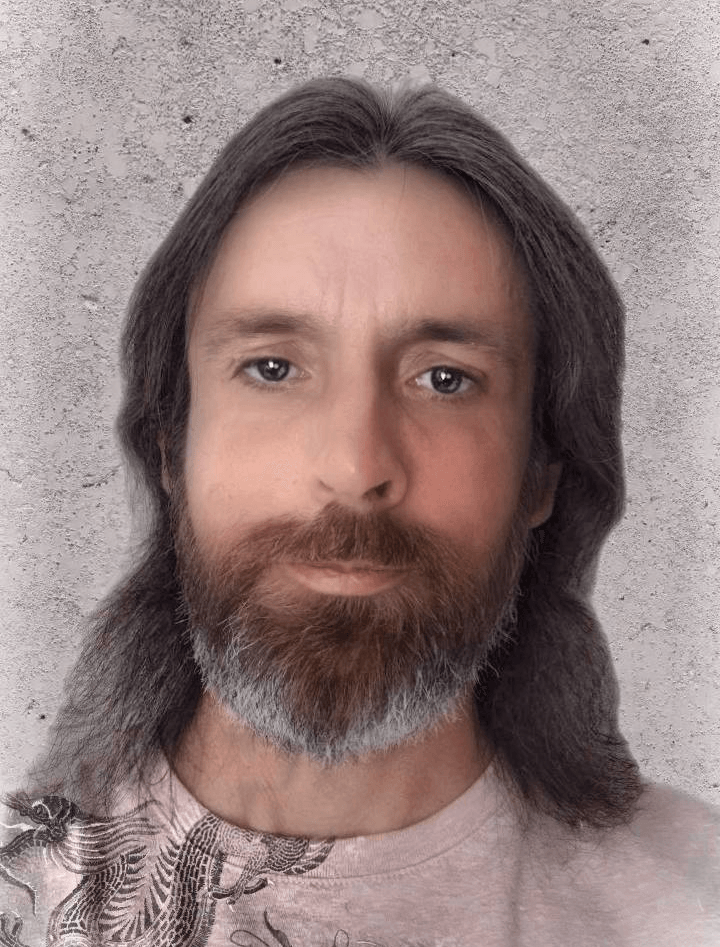
Michael Monk is a world-renowned healer, teacher, and founder of the Avatar Energy Mastery Institute, where thousands of people have studied healing, clairvoyance, and what he calls energy mastery.
His path started in 1999 with what he describes as a spontaneous, undeniable experience of God's voice, followed by a series of physical healings that defied every explanation available to him at the time.
If this conversation is calling to you, you can listen to the full episode of The Spiritually Curious Therapist wherever you get your podcasts.
SUBSCRIBE TO OUR WEEKLY THURSDAY NEWSLETTER
A weekly newsletter for people who are tired of understanding their patterns and still feeling stuck.