Did you sign up for our weekly newsletter on 'From Lock to Liberation' yet? JOIN US HERE.
JOURNEY WITH KINDRED SOULS
Together, we'll explore the intersection of nervous system science, mental health, spirituality, and healing.
Why the Story You Tell About Your Pain Might Be Keeping You Stuck
Why the Story You Tell About Your Pain Might Be Keeping You Stuck
Listen to the conversation
Two Near-Death Experiences and the Coin That Flipped Everything
I have conversations on this podcast almost every week, but every once in a while one sticks with me longer than the rest. This is one of those. My guest was Dr. Colleen Quinn, and by the end of our talk I found myself thinking differently about grief, about control, and about what it actually means to surrender to something bigger than yourself.
Colleen is a mystic and a transpersonal, trauma informed psychologist. She's trained in internal family systems, somatic experiencing, and ketamine assisted psychotherapy, and she's certified in breathwork, which she now uses to guide her clients back to their own souls. In 2018 she had her second near-death experience, and that moment became the catalyst for what she calls her awakening. Her transformation is chronicled in her new book, Essence Merging, which she describes as a primer for what happens when you finally give up the ego's need for control. She also offers a free download called Nine Simple Steps to Awakening on her website.
What struck me most about Colleen wasn't her credentials, even though they're impressive. It was how plainly she talks about things most of us only think about in private. Death. Grief. What actually happens when you finally stop fighting your own life.
The Story She Told Herself About Losing Her Brother
About twenty years before her first near-death experience, Colleen's brother died in a car accident. He was fifteen. She was young too, and the loss cracked something open in her that took years to understand.
For three years, Colleen lived inside complicated grief that eventually turned into depression. She told me the story she had built around his death without even realizing she'd built it. If she let herself laugh again, if she let herself be happy, it meant she was forgetting him. It meant she didn't care enough. So some part of her stayed in the sadness on purpose, because staying sad felt like the only way left to love him.
Then, in her words, the coin flipped. She started to see it differently. She had been lucky enough to know one of the most selfless, funniest people she had ever met, for fifteen whole years. And if she hadn't learned what he came to teach her, she never would have. The facts of the loss didn't change. The story underneath it did.
She told me she sees this same pattern with almost every client who comes to her carrying trauma. The story gets rewritten, and that rewrite is what actually changes how the body holds the pain. It isn't about pretending something didn't hurt. It's about noticing that the meaning you've attached to the hurt was never fixed in stone to begin with.
What Breathwork Actually Does for a Stuck Nervous System
Colleen's path to breathwork came through her second near-death experience. She had pneumonia for ten months, something that should have cleared up in three weeks. She was tested for every autoimmune condition and came back clear, and somewhere in that long recovery she took stock of her life and realized she had been living with what she called a stingy heart. Guarded. Protected. Not fully open to love the way she wanted to be.
Not long after, she found her way to a breathwork retreat in Costa Rica. She describes breathwork as a way of bringing the unconscious into consciousness. So much of what runs our lives, she told me, comes from patterns we can't see, patterns that were formed long before we had language for them. Breathwork is her way of surfacing those old, stored experiences so they can finally be felt all the way through, rather than staying stuck in the body.
This is something I talk about often on this podcast, because it lines up so closely with how I understand nervous system work. Insight alone rarely resolves trauma. You can understand a pattern completely and still feel stuck inside it. The body needs a different kind of processing, one that happens below the level of thought.
Real Sovereignty and What Love Actually Means
One of my favorite parts of this conversation was when Colleen and I talked about the word love. It gets used so loosely that it's almost lost its meaning. Colleen defines love as an action, something that lifts the greater good, including yourself.
That last part is the piece a lot of people miss. Real love isn't self erasure. It includes you. Colleen talked about what she calls sovereignty, which sounded a lot like healthy boundaries to me. When you stand firmly in what's true for you, without trying to control or manage someone else's choices, you actually take the conflict out of the relationship. You let the other person have their own experience, and you trust that when you both come back together, you'll both be richer for having gone your separate ways for a while.
This resonated with so much of what I see in my own work. People pleasing so often gets mistaken for kindness, when really it's often a way of avoiding someone else's disappointment. Colleen named this clearly. Sovereignty isn't selfish. It's actually one of the most loving things you can offer another person.
The Love Squeeze and the Lieutenant Dan Moment
Colleen has a phrase I haven't been able to stop thinking about since we recorded. She calls hard seasons love squeezes instead of pain. It's a small shift in language, but it changes the energy of the whole experience.
She told me about Lieutenant Dan from Forrest Gump, up on the mast of that shrimp boat in the middle of a storm, finally letting go of the fight to control everything, right before the shrimp finally start pouring in. Colleen said that's exactly how it feels in real life. We fight and fight to stay in control, and it's usually only once we finally surrender that things start to shift.
She connected this to what she calls hormetic stressors, things like cold plunges, sauna, and breathwork, which put a mild, manageable stress on the body in a way that actually strengthens it. The key, she said, is staying calm inside the stress instead of panicking through it. That's when the nervous system actually gets stronger instead of more reactive.
The Quantum Field of Possibilities
Toward the end of our conversation, Colleen gave one of my favorite examples of the whole episode. She talked about walking into a grocery store. Everyone in that store is standing in the same physical space, but everyone is living in a completely different internal world. Someone is angry. Someone is impatient. Someone is having the best day of their week. She said we're all choosing which of those dimensions we bring into any given moment, and that choice shapes what we experience.
It's a simple picture, but it's a powerful reminder that we have more say in our internal state than we often believe, even when the external circumstances stay exactly the same
What This Means for You
If any part of this resonates, if you've been carrying a story about your own pain that's kept you stuck longer than you needed to be, you're not alone in that. So much of the work I do centers on exactly this. Not forcing a new story on top of an old wound, but creating enough safety in the body that a new story can finally take root on its own.
That's a lot of what we work on inside From Lock to Liberation. If this episode stirred something in you, I'd love for you to listen to the full conversation with Colleen, and I'd love to have you join us.
Where to Find Dr. Colleen Quinn
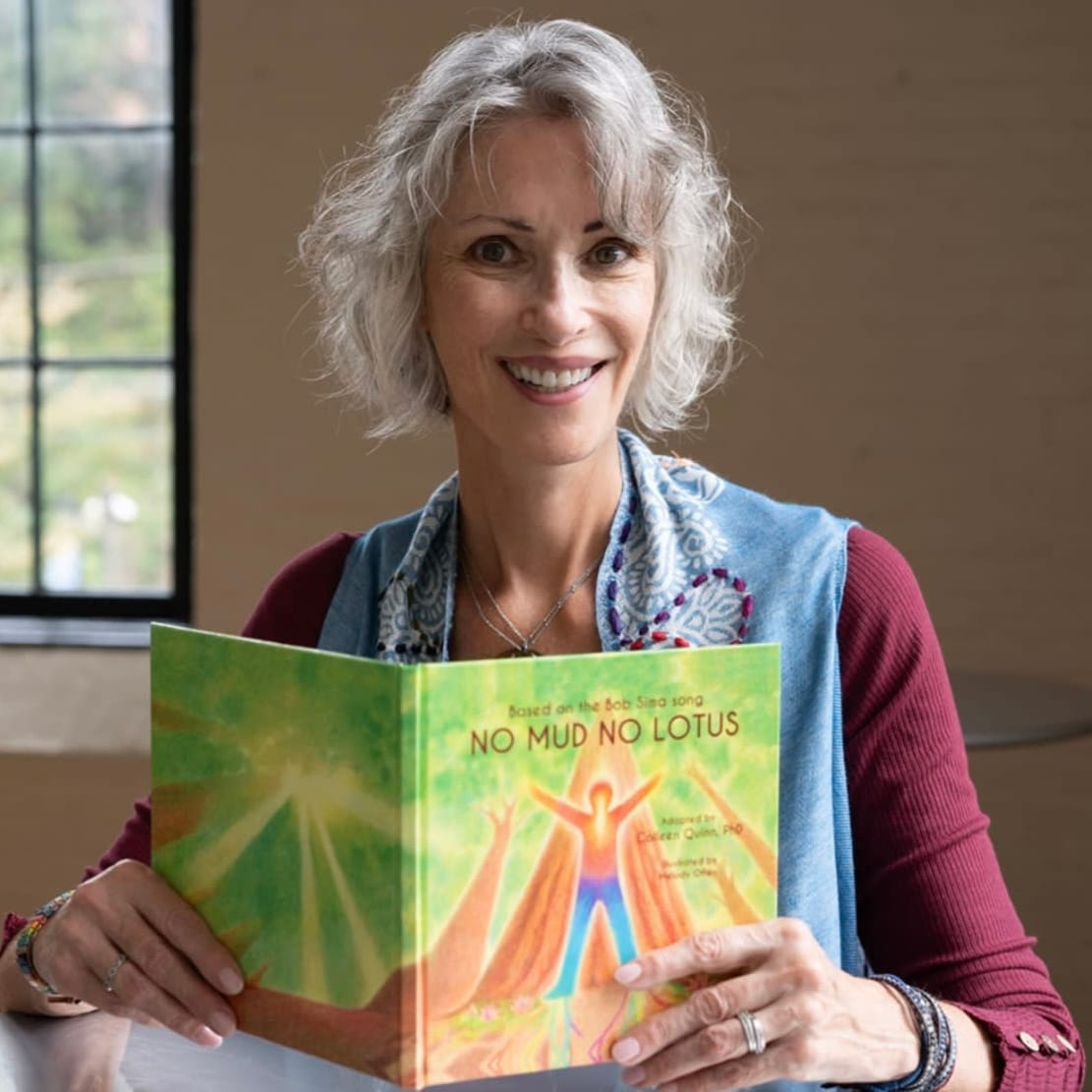
Colleen is a mystic and a transpersonal, trauma-informed psychologist trained in internal family systems, somatic experiencing, and breathwork. In 2018, she had her second near-death experience, which became the catalyst for what she calls her awakening. She wrote about the whole journey in her new book, Essence Merging.
Check her website: www.essencemerging.com
SUBSCRIBE TO OUR WEEKLY THURSDAY NEWSLETTER

A weekly newsletter for people who are tired of understanding their patterns and still feeling stuck.