Did you sign up for our weekly newsletter on 'From Lock to Liberation' yet? JOIN US HERE.
JOURNEY WITH KINDRED SOULS
Together, we'll explore the intersection of nervous system science, mental health, spirituality, and healing.
What a Disfigured Face Experiment Teaches Us About Self Perception
What a Disfigured Face Experiment Teaches Us About Self Perception
Listen to the conversation
Why Nature Calms Your Nervous System Faster Than Anything Else
Every so often a guest shows up on my podcast and the conversation goes somewhere completely different than I expected. That happened this week with Wren Morrow, an outdoor boudoir and erotic adventure photographer based in the Pacific Northwest. I thought we would talk about photography. Instead we talked about nervous system safety, belief, shame, and what it really takes to rebuild an identity from scratch.
Wren grew up in a small town in the South, raised in a strict Christian home. She married young and stayed deeply involved in church life for years. Then one day, she knew she could not stay any longer.
She got a divorce, left her faith, and sold everything that did not fit in her car. She moved to a town on the West Coast she had never even seen, and had a job and a place to live lined up within three days. Her mantra during that time was simple. Fate loves the fearless.
What followed was not a clean, graceful transition. Wren was honest about that. She described the period right after leaving as a blank canvas, except the only materials she had to work with were pain and chaos. She hurt people. She acted without much thought for anyone but herself. She was, in her own words, learning for the first time what it meant to actually care about the impact of her choices.
Eventually, she let the consequences catch up with her. She faced the mess honestly and held a vision for who she wanted to become. That is the part of the story I think matters most. The leap is rarely the whole transformation. What you do once you slow down and look back is what turns a chaotic season into real growth.
Why Fear and Excitement Feel So Similar in the Body
One of the most useful things Wren said during our conversation was about the physical sensation of fear versus excitement. She pointed out that they live in the nervous system almost the exact same way. The tight, jittery feeling in your chest when you are terrified is nearly identical to the feeling when you are thrilled.
This lines up with what I see clinically all the time. The body does not hand you a clear label for what it is feeling. It hands you a sensation, and your mind interprets that sensation based on whether you currently feel safe or threatened. Fear tends to feel rushed and urgent, like something has to be decided right now. Intuition tends to feel quieter and steadier, more like a knowing that has been there for a while.
Understanding this distinction matters, especially when you are standing at the edge of a big decision. The sensation in your body will not tell you which one you are feeling. Only the story around it will.
What a Tree Can Teach You That No Person Ever Could
Wren spent a long stretch of her life living in a van, spending most of her days outdoors. What she discovered surprised her. Shame has a much harder time surviving out in nature.
She described it simply. It is a lot harder to project your worst thoughts about yourself onto a tree. A tree cannot give you a strange look. It cannot judge your body or your choices. It just exists, twisted and weathered and completely unbothered by any of it.
From a nervous system perspective, this makes complete sense. Our bodies are constantly scanning the environment for safety, and a huge amount of that scanning happens socially. We read faces. We read tone. We read tiny expressions we are not even consciously aware of. All of that scanning takes energy, and for many people, especially anyone carrying a history of trauma, that scanning rarely turns off.
Nature removes a large piece of what we are scanning for. There is no face to read and no judgment to brace for. The sounds, colors, and textures outside are familiar to our bodies in a way that concrete and fluorescent lighting will never be. That is why your breathing slows down and your shoulders drop the moment you step outside, often without you even trying.
The Disfigured Face Study and What It Reveals About Belief
Wren shared a study during our conversation that I have not been able to stop thinking about. Researchers used stage makeup to create realistic, disfiguring marks on a group of participants. Right before each person left the room, the marks were quietly removed without their knowledge.
Every single person came back later describing the same experience. Strange looks. Uncomfortable stares. A whole day spent feeling like the world was reacting to something on their face. Nobody's face had actually changed. What they believed about themselves shaped exactly what they perceived reflected back at them.
Wren sees a version of this constantly in her work. She told me about a woman who could only see her own neck in every photo, convinced it looked strange when she laughed. Everyone else in the room only saw her wide, joyful smile. Not one other person had noticed the detail she was certain was the most obvious flaw in the picture.
This is worth sitting with. So many of us carry quiet convictions about a flaw everyone else can supposedly see. Most of the time, nobody else is looking at it the way we imagine. The mind does not just observe reality. It builds it, based on what it already expects to find.
The What If Question That Rewires Self Doubt
If you have ever tried to force yourself into a positive affirmation you do not actually believe yet, you already know it rarely works. Telling yourself you are confident, when your brain has years of evidence otherwise, just triggers an argument. Your brain pulls up every memory that proves the statement wrong.
This connects to something called predictive processing. Based on past experience, your brain is constantly predicting what is about to happen. If you have a long history of feeling awkward in photos, your brain predicts that outcome before the camera even comes out, and then helps make the prediction come true.
Wren offered a different approach. Instead of a statement, ask a question. What if this ends up being the most comfortable I have ever felt in front of a camera? A question does not trigger the same defensive response. The brain does not need to argue with a question. It gets curious instead, and starts gathering evidence to actually answer it, rather than evidence to shut it down.
This small shift changes the entire internal experience. You are not lying to yourself or forcing a belief you do not have yet. You are simply opening a door your brain is willing to walk through.
What This Means For Your Own Healing
Wren's story is a reminder that healing rarely looks like a straight line. It looks like a messy exit, a season of pain, and a slow, honest rebuild. It also looks like small, practical tools. Noticing the difference between fear and intuition. Spending more time outside. Trading a forced affirmation for a curious question.
If any part of this resonated with you, I would encourage you to listen to the full conversation with Wren Morrow. There is a lot more in there, including her thoughts on identity, belief, and what it really means to feel at home in your own body again.
Where to Find Wren Morrow
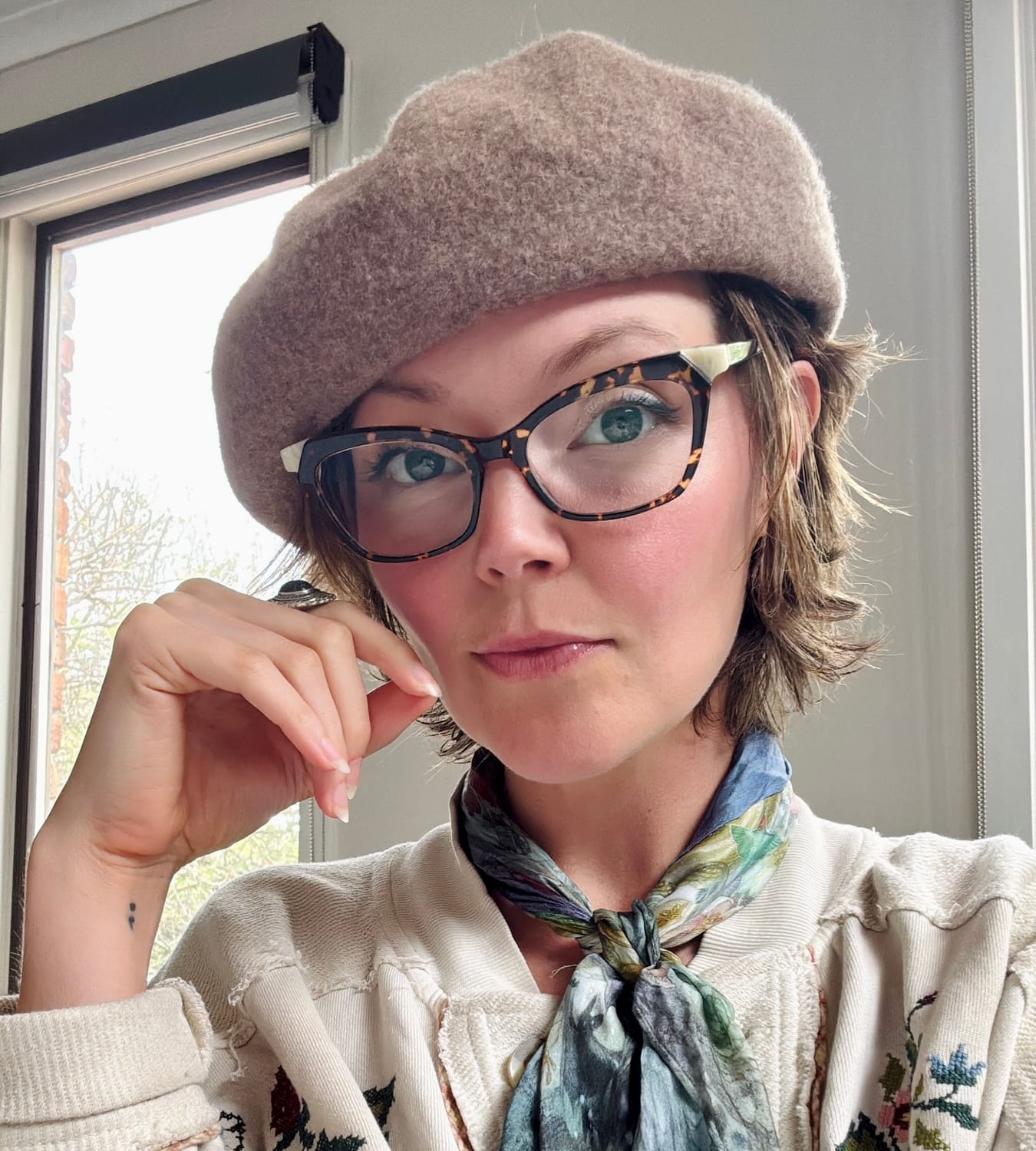
Wren Morrow is an outdoor boudoir and erotic adventure photographer based in the Pacific Northwest. She helps people feel safe in their own bodies through photo shoots out in nature.
Wren grew up in a strict religious home in the South. She got married young and stayed deep in church life for years. Then one day, she walked away from all of it. She got divorced, moved to a town she had never even seen, and started over with nothing but a car and a plan to chase what she wanted.
Now she uses nature, presence, and connection to help other people see themselves the way they were always meant to be seen. You can find her on Instagram at _wrenmorrow or at wrenmorrow.com.
SUBSCRIBE TO OUR WEEKLY THURSDAY NEWSLETTER

A weekly newsletter for people who are tired of understanding their patterns and still feeling stuck.