
Did you sign up for our weekly newsletter on 'From Lock to Liberation' yet? JOIN US HERE.
JOURNEY WITH KINDRED SOULS
Together, we'll explore the intersection of nervous system science, mental health, spirituality, and healing.
Soul Intelligence and Nervous System Healing
Soul Intelligence and Nervous System Healing
Listen to the conversation
Every episode, I love introducing you to someone whose story and work light me up. This week's guest brings a mix of deep study, lived experience, and a warm, no-nonsense way of teaching.
Sanné Lind is a teacher, certified coach, interfaith minister, and the author of SI: Soul Intelligence: Quantum Living from the Inside Out. Her search for answers led her to psychology at age 12 and later to a six-year study of mysticism, comparative religion, and consciousness at JFK University. For 20 years, she lived with clinical depression behind a mask of wellness, even while she studied shamanism and served as a minister. Today she is the creator of the Quantum Soul Sync Method, calls herself a Sherpa shaman, and has a special place in her heart for wounded healers. You can learn more about her at heartsync.global.
When You Know Everything and Still Feel Stuck
So many of the people I work with have done a lot of inner work. They can name their patterns and tell you exactly where those patterns came from. And still, something isn't shifting.
Sanné lived in that gap for a long time. She told me she had the education, the language, and the life that looked right from the outside, yet she felt low day after day. She went to healer after healer and read book after book, and nothing seemed to connect the dots for her.
What I loved is how she named this as something bigger than her own story. She sees so many people waking up right now and asking, "What else is here for me?" If you've ever wondered whether there's more to healing than understanding, you're in good company.
Sanné's Story: Twenty Years of Depression Behind a Life That Looked Good
Sanné's path started long before she had words for it. Her story is a reminder that the seeds of our healing can be planted early, even if they don't take root until much later.
A Mom Who Was a Seeker
Sanné grew up in the Pacific Northwest with a mom who was always exploring. Her mom started as an interior designer, then studied color therapy, developed her intuition, and later wrote about crystals. When Sanné was 12 and struggling with migraines bad enough to need medication, her mom gave her Carl Jung to read. At 15, she had shingles. Looking back, Sanné sees these as her young body carrying a lot of stress that nobody knew how to help her with.
She went on to a creative career in interior, clothing, and jewelry design, spent years in the corporate world, and became an interfaith minister in 2003. Through all of it, she stayed a seeker. And through all of it, depression followed her.
Grief as a Wake-Up Call
Everything changed when Sanné lost her sister to suicide. Sanné was in a very dark place herself at that time, and she had no idea her sister was struggling too. That loss rocked her whole world.
In her grief, Sanné made a decision. She would take radical responsibility for her own inner states and face whatever she needed to face. She was clear that she didn't do this alone. Her partner held steady for her, and she found teachers who helped her connect what she already knew to what she was feeling.
Why You Can't Think Your Way Into Healing
This was the part of our conversation where I asked Sanné to slow down, because it matters so much. Her biggest realization was that healing isn't an intellectual process.
She had been trying to get there with her brain. She had all the knowledge, and it simply wasn't reaching the part of her that was hurting. As she put it, you can't get there with your brain alone.
I talk about this with my clients all the time. Awareness is the first step, but it doesn't change our physiology. Our brain can't just talk itself out of what it's feeling. What our system is trying to tell us shows up through our body, our emotions, and our sensations, and that's where the real work happens.
A Quick Note About Medication
Sanné shared that part of her turning point was coming off her medication. I want to be really clear here. Neither of us is recommending that anyone stop their medication on their own. Please talk with your doctor before making any changes.
What I took from her story is the bigger point underneath it. Medication can ease symptoms, and it can also come with side effects. Sanné wanted to feel what was really going on inside her so she could work with it, and she had support around her while she did.
Understanding Emotional Frequency and the Emotional Ladder
Sanné talks a lot about frequency and vibration. If that language feels unfamiliar, she makes it really simple.
We all know what a good vibe and a bad vibe feel like. Sanné sees our emotions on a kind of ladder. At the top are feelings like love, joy, peace, curiosity, and fun. Further down are boredom, anger, despair, and grief. In her view, the feelings we sit in most often start to shape how we experience our days.
She was careful to say that none of this is about beating yourself up. There's no guilt or shame required. Most of what keeps us low comes from unconscious beliefs, like "something is wrong with me," that we never chose on purpose.
You Can't Jump From Despair to Joy
One of the kindest things Sanné said is that you can't leap from the bottom rung to the top. If you're in despair, trying to force yourself into joy usually backfires.
Instead, she suggests finding the best feeling thought you can reach from where you are right now, and then the next one. She also made the point that this is different from spiritual bypassing, which she described as painting pink over things. You still feel what's there. You just keep moving up, one rung at a time.
What "Repent" Really Means
I didn't expect a word like repent to become one of my favorite moments of this episode. Sanné gave it a whole new life for me.
She explained that repent simply means to turn around. It has nothing to do with guilt or shame. It just means you notice you've been heading in a direction that isn't serving you, and you turn back.
For Sanné, that turning point was her sister's death. She realized she had been watching herself spiral from the outside, and she needed to get inside and start climbing. I find that so freeing. Turning around doesn't require punishment. It only asks that we notice and choose again.
Why Uncomfortable Feelings Can Be a Doorway
This might be the most practical part of our conversation. Sanné offered a few simple ways to meet hard feelings in the moment they show up.
Her big idea is that the friction is the portal. When something uncomfortable rises up, most of us try to escape it by doing laundry or checking email. Sanné invites us to pause right there instead, because that moment of discomfort is where the real work can happen.
The ABCs: Allow Benefit Constantly
Sanné's ABCs stand for allow benefit constantly. When something frustrating happens, she asks herself, "How is this for me?"
Her example made me laugh because it's so relatable. If someone is late and you start looping on how they're always late, you can look for the benefit. Maybe you finally have time to put the clothes in the dryer, feed the cat, or make that call.
Getting Your Hooks Out of Blame
Sanné uses the image of a fishing reel. When she catches herself looping on what someone else did or said, she reels her hooks back out of that judgment and comes home to herself.
She believes blaming anything outside of yourself is a dead end, because it only feeds the pattern. She also has a sweet name for her soul. She calls it her inner beloved, and she calls on it when she needs to come back to center.
Does Creating Your Reality Mean You Caused Your Trauma?
Whenever conversations turn to ideas like creating your own reality, I get a little protective. I've seen those ideas misheard in spiritual spaces in ways that cause real harm.
So I asked Sanné directly what she would say to someone with a trauma history. She was clear that she would never tell someone they created their trauma. She said that would only add more guilt and shame, which can be re-traumatizing. Good coaching, in her view, helps people reach their own understanding in their own time.
I also asked what happens when another person's behavior is truly harmful. Should you turn it back on yourself instead of setting a boundary?
Sanné's answer was simple. She would never advocate for staying in any harmful situation. Getting right with yourself is what helps you see clearly enough to decide whether to stay or go. As she put it, discernment is maturity.
Clearing the Cache: How Sanné Helps People Heal Today
Sanné has a memorable way of describing the old beliefs we carry. She calls them a distorted identity data cache.
She compares it to a computer. You can't just keep adding another course, another certificate, or another achievement on top of old programming. You have to clear the cache first. For Sanné, that means working with beliefs like "I'm not good enough" or "I'm not lovable" that often took shape early in life.
She shared that she spent about 50 years searching, and once she found the work that fit, it took about 18 months to feel the shift. She was honest that she's not "done." She's simply happy and functional most of the time, and she knows what to do when old stuff shows up. Today she teaches this through her year-long program and her Quantum Soul Sync Method, and her dream is to become a teacher of teachers so more people can learn to do this for themselves.
This fits with what we now know about the brain. It can learn, unlearn, and relearn across our whole lives, which means the patterns we carry aren't fixed forever.
Listen to the Full Episode With Sanné Lind
There's so much more in this conversation than I could fit here, including Sanné's closing reminder that you are loved beyond measure. It was one of those talks that left me with chills.
To learn more about Sanné's work and her book, SI: Soul Intelligence, visit heartsync.global.
And if you're ready to meet those stuck places in your body as well as your mind, my signature course, From Lock to Liberation, was built for exactly that.
If you're having thoughts of suicide, please reach out for support. In the U.S., you can call or text 988 any time of day.
Where to Find Sanné Lind
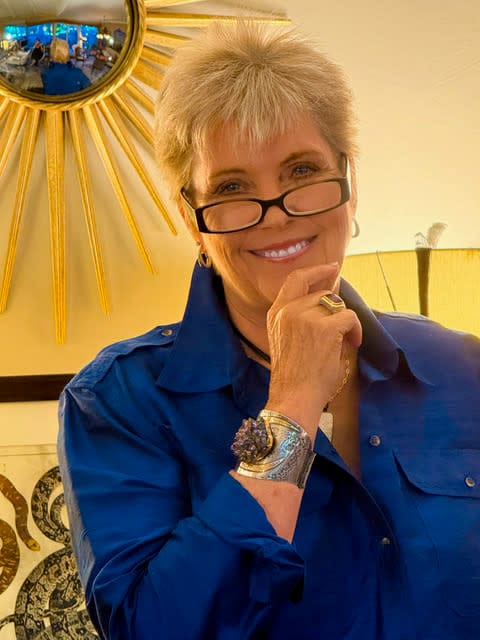
Sanné Lind is a teacher, certified coach, interfaith minister, and the author of SI: Soul Intelligence: Quantum Living from the Inside Out. Her search for answers led her to psychology at age 12 and later to a six-year study of mysticism, comparative religion, and consciousness at JFK University.
For 20 years, she lived with clinical depression behind a mask of wellness, even while she studied shamanism and served as a minister. Today she is the creator of the Quantum Soul Sync Method, calls herself a Sherpa shaman, and has a special place in her heart for wounded healers. You can learn more about her at heartsync.global.
SUBSCRIBE TO OUR WEEKLY THURSDAY NEWSLETTER

A weekly newsletter for people who are tired of understanding their patterns and still feeling stuck.