
Did you sign up for our weekly newsletter on 'From Lock to Liberation' yet? JOIN US HERE.
JOURNEY WITH KINDRED SOULS
Together, we'll explore the intersection of nervous system science, mental health, spirituality, and healing.
How Reiki and Pain Science Work Together to Calm the Pain-Fear Loop
How Reiki and Pain Science Work Together to Calm the Pain-Fear Loop
Listen to the conversation
If you've lived with pain or physical symptoms for a long time, you probably know how much of your life can end up revolving around them. It can creep in slowly until one day you realize your body has become something you manage all day long. I want to start here because so many people feel this and never say it out loud.
There are the appointments and the tests. There are the treatments, the exercises, the food changes, and the supplements. There's the constant checking to see whether something feels better or worse than it did yesterday. When something hurts or feels wrong, we want to do whatever we can to change it, and we want to understand what will make it feel better.
None of that is wrong. I'm not asking why you're doing all of it, because I already know why. You're doing it because you want relief, and that's completely human.
The question I'm more curious about is a little different. What has your system learned from having to do all of this?
How the Pain-Fear Loop Keeps Symptoms Going
To understand why Reiki can help, it's important to understand what often keeps persistent symptoms going in the first place. A lot of new research is pointing to the same idea. Many ongoing symptoms are connected to a brain and nervous system that have gotten stuck in a protective loop.
Here's how that loop usually works. We feel a symptom, and we give it our attention. It becomes a worry, so we start monitoring it, protecting it, and trying to fix it. That means even more attention goes to the body, and the brain reads all of that attention as proof that something is dangerous.
This is often called the pain-fear loop, though it can apply to many kinds of symptoms, not just pain. The symptom gets read by the brain as a threat, we become hypervigilant, that vigilance reinforces the sense of threat, and the symptom grows louder. Then the whole thing starts again.
When neurons fire together, they wire together. So the longer this loop runs, the stronger it gets. All of this happens below our awareness. We don't choose it on purpose. The hopeful part is that what the brain has learned, it can also unlearn.
The Lock Is the Prediction, Not the Symptom
This is something I really want you to sit with. The understandable effort to solve the problem can slowly become a pattern of its own. Underneath that pattern, there's usually a prediction that sounds something like, "If I don't stay on top of this, something bad could happen," or, "If I don't figure out what this is, it's only going to get worse."
In my work, I talk a lot about moving from lock to liberation. In this case, the symptom itself isn't the lock. The lock is the protective prediction and the pattern that forms around it.
So the question becomes: what am I afraid might happen if I stop monitoring, fixing, or protecting? I'll say it once more so you can really feel it. What am I afraid might happen if I stop monitoring, fixing, or protecting?
Why Knowing You're Safe Isn't the Same as Feeling Safe
Before I go any further, I want to be very clear about something. Pain and body symptoms are real. They aren't imaginary, and they aren't all in your head, no matter what anyone has told you.
Your nervous system is always sending information to your brain. Your brain then compares that information with what you've lived through before, along with what's happening around you, where your attention is, what you expect, and what feels threatening. Then it sends a response back through the body. A protective system can keep responding based on what it learned in the past, even when life has changed.
That's why simply knowing in your head that you're okay doesn't always make your body feel okay. Knowing you're safe and feeling safe aren't always the same thing.
The Smoke Alarm That Won't Turn Off
I like to think of it like a smoke alarm that keeps going off even though the fire is already out. The alarm isn't broken. It's doing exactly what it was built to do. It just hasn't gotten the message yet that the danger has passed.
What helps most with these neuroplastic symptoms, which are symptoms the brain has learned and keeps producing, is creating enough safety in the body that the brain and nervous system can start to loosen that lock a little bit. We aren't trying to rip the alarm off the wall. We're creating the conditions that let it finally quiet down.
Why Reiki Can Help With Persistent Pain and Symptoms
So why Reiki? People living with persistent symptoms usually have a huge amount of experience doing things to their bodies. Reiki offers a chance to practice something completely different.
Think about everything you've done to your body over the years. You've stretched it, tested it, treated it, strengthened it, tracked it, and tried to fix it. Reiki invites you into presence without immediately trying to produce an outcome.
I want to be really clear here. I'm not offering Reiki as one more thing to fix your body. It isn't a cure, and it isn't even a treatment in the usual sense. It's a practice you can come back to that helps change the state you're in and the way you relate to your body. Here are a few of the ways that happens.
Gassho: Gathering Your Attention
One of the first things we do in Reiki is called Gassho. It's a simple way of gathering your attention and becoming present. There's nothing fancy about it, and that's part of what makes it so powerful.
We use the breath and the Hara, which is your center, about two inches below your belly button. We let our attention settle into the body without judging what we find. There's nothing to change and nothing to analyze. We just arrive.
Self-Touch and Hand Placements
Reiki also uses gentle self-touch and hand placements. For someone who is used to poking, checking, and examining their body for problems, this can feel very new.
The idea is to meet your body with warmth, steadiness, and care rather than trying to assess it. Your hands become a way of saying, "I'm here with you," instead of, "What's wrong now?"
Noticing and Receiving
Another part of the practice is noticing and receiving. We let sensations be present without rushing to label them as dangerous or decide what they mean.
This might be the most important piece when it comes to neuroplastic symptoms. When you can let a sensation simply exist without sounding the alarm, your brain gets a chance to have a different experience.
How Reiki and Somatic Tracking Work Together
If you've heard of pain reprocessing therapy, you may know that one of its most effective tools is called somatic tracking. Reiki fits right alongside it in a really beautiful way. I've spent the past year diving deep into this work, and the way the two support each other still excites me.
In somatic tracking, we stay with the symptom while also checking in on our safety and bringing in a lighter, more positive feeling. Over time, this retrains the brain. The old pattern was that a symptom meant fear, which made the symptom stronger. The new pattern is that a symptom can be held with safety, curiosity, and even gratitude, and the body can let go a little.
Sometimes people feel relief right away, but usually that's not how it works. It's a practice we do again and again, a lot like lifting weights or training for a marathon. We're building muscle memory because we're rewiring the pathways in the brain.
Reiki gives us a lovely structure for doing this kind of practice. It also opens the door to self-compassion. At its heart, it asks one simple question. Can I be here with myself while this is happening?
The Five Reiki Precepts as a Gentle Way to Live With Symptoms
The foundation of a Reiki practice is something called the five precepts. These are five short statements, and I think of them as invitations rather than rules. There's no dogma here, just a way of coming back to yourself.
Every precept begins with "just for today." Just for today, I will not anger. Just for today, I will not worry. Just for today, I will be grateful for my blessings. Just for today, I will be true to myself and my way. Just for today, I will be kind to myself and all things.
Each one asks us to get curious about what's happening inside. We can let anger in and look at it with curiosity instead of letting it take over. We can notice our worries and choose to release the ones that aren't helping us right now. We can feel grateful for our blessings, not as a way of ignoring what's hard, but as a way of making room for both.
We can tune into what our inner self needs and wants, and we can offer ourselves the kind of compassion that naturally spills over into compassion for others. This is how a new relationship with ourselves and our symptoms begins to grow.
Why Your Symptoms Are Messengers Worth Listening To
It makes total sense that ongoing symptoms create vigilance. Thoughts like "What's that?" or "Is it getting worse?" or "I can't do this" are the natural result of a body trying to protect you. I want to honor that before we talk about anything else.
Pain and symptoms exist to send a message. If you put your hand on a hot stove, it hurts because you need to move your hand right away. Pain is necessary, and it does important work.
So the goal is never to force yourself to feel calm or to convince yourself that nothing is wrong. The practice is to create enough safety to stay present and get curious. Little by little, new experiences become possible. You might find that you can notice something without reacting right away, feel something without deciding what it means, and touch your body with kindness instead of inspection.
This is where Reiki, nervous system regulation, and pain science can meet, without turning Reiki into just another neuroscience technique.
What Reiki Is and Isn't for Chronic Pain and Illness
Because this matters so much, I want to be honest about the limits. Not all persistent pain or physical symptoms are neuroplastic. Some symptoms are mixed, and some come from something structural happening in the body.
Reiki is not a cure for disease, and it is not a replacement for medical care in any way. Please don't ignore symptoms that are new, changing, or worrying. Those deserve medical attention.
I'm also not saying your symptoms are psychological or all in your head. Whatever the source of your symptoms, one of the most important things is your relationship to them. The symptoms are real. What I'm curious about is what your nervous system may have learned about your body, and about what all of this means, because of everything you've been through.
Questions to Explore What Your Nervous System Has Learned
Sometimes a lock looks like people-pleasing, overthinking, or old relationship patterns. Other times, life slowly gets organized around symptoms. It becomes about what you can do, what you can't do, what to avoid, what to watch, and what to fix.
The goal is not to tear down these protections. They're important, and they developed for a reason. The goal is to understand what your system is predicting and to create enough safety that it can experience something new.
So I'll leave you with two questions to play with for a while. What has your nervous system learned about your body because of everything you've been through? And is there another possibility?
If you're tired of your body feeling like a problem you have to solve, I'd love to support you. My signature course, From Lock to Liberation, was built for this kind of work, helping your system feel safe enough to try something new. I'm also hosting a very small six-person Reiki retreat in the Philadelphia area this November, where I'll teach Reiki as a self-practice for people living with persistent pain and symptoms. You can reach out anytime with questions, even if you just want to learn more.
In case you don't know me yet
Meet Jodi Silverman
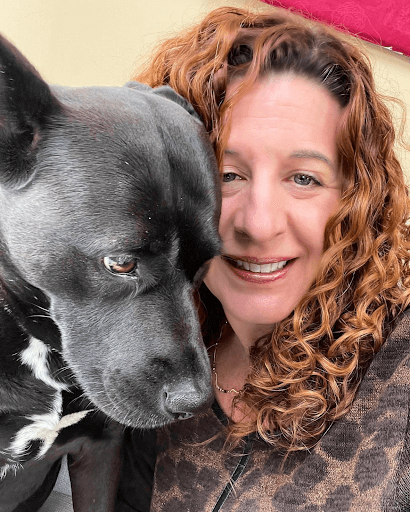
I'm Jodi Silverman, a Licensed Clinical Social Worker, Reiki Master/Teacher, and the founder of TheraChi Healing. I've spent over 30 years helping people heal from trauma, chronic stress, and the patterns that keep repeating even after they understand them. These days, my work brings together nervous system regulation, pain reprocessing therapy, and Reiki, because I've seen again and again that real change happens when the body feels safe enough to let go.
SUBSCRIBE TO OUR WEEKLY THURSDAY NEWSLETTER

A weekly newsletter for people who are tired of understanding their patterns and still feeling stuck.