Did you sign up for our weekly newsletter on 'From Lock to Liberation' yet? JOIN US HERE.
JOURNEY WITH KINDRED SOULS
Together, we'll explore the intersection of nervous system science, mental health, spirituality, and healing.
The Three Nervous System States Every High Achiever Cycles Through
The Three Nervous System States Every High Achiever Cycles Through
Listen to the conversation
When Your Body Says No More
I recorded a conversation this week that I haven't been able to stop thinking about. My guest, Natasha Ramlall, is an embodied integration coach who works with high functioning women moving through identity rupture, which is her language for the space between who you were and who you're becoming, and it's a space I think a lot of us find ourselves in more often than we'd like to admit.
Natasha spent 25 years working with newcomers and refugees settling in Canada. For 14 of those years, she was also leading a team. It was meaningful work, and she loved it, but eventually she reached what she calls her growth edge. She knew there was something more for her, so she started building a new career supporting women through their own transitions.
What she didn't do was take a break in between. She went from one form of emotional caring work straight into another, and her body kept score, even when she wasn't paying attention.
The Functional Freeze Nobody Talks About
Natasha described what happened next in a way that stuck with me. She called it a functional freeze, wherein she was still getting things done, technically, but she couldn't imagine going to the grocery store to the point that even laundry felt impossible. These were tiny tasks that had never been a big deal before, and suddenly they felt like mountains.
For someone who had spent decades being the reliable one, the person everyone counted on to have it together, this was deeply disorienting. She didn't recognize herself, and that disconnect, more than any single event, is often what tells us an identity rupture is underway.
The Three States We Cycle Through
One of the most useful frameworks Natasha shared is the idea that we move through three distinct states, and none of them are wrong.
The first is Functional Freeze, in which exhaustion is so deep that even resting no longer feels restful anymore. Natasha described it as a strange flip, where at some point it actually takes more energy to sit still than to get moving again.
The second is the Push, which is the state most high achievers know intimately. Ideas coming fast, urgency building, a drive to control the outcome by working harder. Natasha said this state eventually shows up as brain fog, impatience, and a sense that nothing is working no matter how hard she tries.
The third state is the one she called Beautiful. It's a place of surrender and trust, where she lets herself simply be with discomfort instead of fighting it or trying to fix it. This is the state most of us are chasing when we talk about regulation or peace, but Natasha was honest about something important. She can't live there permanently, and none of us can. Life moves us through all three, and the real progress isn't staying in the peaceful state forever. It's recognizing which state you're in and trusting that each one has something to teach you.
Why Rest Can Feel Harder Than Pushing
This might be the part of our conversation I keep coming back to. Natasha explained that there comes a point in the freeze state where rest stops feeling restful. It starts to feel more exhausting than taking action. That's such a strange and specific kind of suffering, being too depleted to rest and too depleted to push, all at the same time.
If you've ever felt that particular flavor of stuck, you're not broken and you're not lazy. Your nervous system is simply doing what nervous systems do. It's trying to find its way back to a state that feels survivable, even if that state doesn't look like traditional rest.
Her First Identity Rupture
This wasn't the first time Natasha's identity shifted overnight. In her mid-twenties, she was traveling alone through Asia, young and free and just starting to learn who she was outside of any role. Then she fell in love, got married, and got pregnant on her honeymoon. Within a very short window of time, she went from a carefree traveler to a wife, a new immigrant sponsoring her husband, and a mother.
She told me she didn't freeze during that transition because she pushed through, moved into a sympathetic fight state and simply got through it, and she believes that's how she became the hyper capable, high producing woman she was for decades afterward. It worked, in the sense that it got her through, but it also set a pattern that her body would eventually need to unlearn.
There's something important in that wherein the strategies that get us through a crisis aren't always the strategies that serve us once the crisis has passed. Natasha's nervous system learned that pushing equals safety. It took years, and a second identity rupture, for her to discover that safety could look different.
Unfamiliar Is Not the Same as Unsafe
We spent a good chunk of our conversation on a distinction that I think changes everything once you really understand it. Our nervous systems often can't tell the difference between something that's unfamiliar and something that's genuinely unsafe because both get flagged the same way, and both can trigger the same alarm.
This matters enormously when you're trying to grow, change careers, leave a relationship, or step into a version of yourself that feels more true. Your body might sound every warning bell it has, not because the new path is dangerous, but because it's unknown. Natasha's work is largely about helping women learn to sit with that discomfort long enough to tell the difference.
Am I Safe Enough to Be Fully Myself
Natasha said something during this part of our conversation that I've kept turning over since we recorded. Our nervous system's primary job is to constantly ask, am I safe? But there's a deeper layer underneath that question, one she framed as, am I safe enough to be fully myself.
That distinction matters because authenticity and connection are both basic human needs, and when they come into conflict, connection almost always wins. Being fully yourself can feel like it risks the relationship. So we learn, often without realizing it, to trade pieces of our authentic self for the safety of belonging. Understanding that trade is often the first step toward making a different choice.
She also shared a story about a friend who spent her entire life inside the structure of school, then teaching, moving from a Monday through Friday schedule she'd known since she was three years old straight into a career with the same rhythm. One day, on her way back to work after a doctor's appointment, she passed people sitting outside a cafe in the middle of the day, just living their lives. Something cracked open for her. She realized her whole understanding of what a human life could look like had been shaped by a schedule she'd never questioned.
Natasha said that's what happens on a larger scale when we return to the body. We start to notice that we've been living inside a limited view built entirely by our own head, and when we let our emotional and physical experience back into the conversation, the potential we can see for our lives expands in a way that can feel both powerful and unsettling at the same time.
What Resourcing Actually Means
Natasha talked about a practice she calls resourcing, and it's simpler than it sounds. It's the act of coming back into your body and finding even a small glimmer of stillness, safety, or neutrality. Something steady you can return to when everything else feels like too much.
She was clear that this isn't about forcing yourself into calm. Sometimes resourcing means noticing a feeling of okay-ness in the present moment. Other times it means slowly growing your capacity to sit with something uncomfortable without it overwhelming you. Either way, it becomes the anchor that makes deeper healing work possible. Without that anchor, revisiting old pain just risks re-traumatizing yourself further.
The Guilt Underneath the Rest
We also talked honestly about guilt, especially the guilt so many capable, high functioning people feel when they finally allow themselves to slow down. Natasha shared that this guilt often traces back to childhood messaging, the idea that showing certain feelings, or needing rest, risked losing connection with the people who mattered most.
That early conditioning doesn't just disappear with age. It follows us into adulthood and shapes how safe we feel expressing our authentic needs, even with the people closest to us. Natasha's approach is about creating spaces where women can practice being witnessed in their full authenticity, so that pattern can slowly begin to rewire.
Finding the Beauty in the Discomfort
Toward the end of our conversation, Natasha shared something I think is worth sitting with. She believes the discomfort so many of us are feeling right now, individually and collectively, might actually be a catalyst for something beautiful. Not despite the struggle, but because of it.
If any part of this resonates, whether it's the guilt of resting, the confusion of not recognizing yourself, or the exhaustion of constantly pushing, I hope this conversation gives you some language for what you're moving through. You can listen to the full episode using the link above, and if you want to keep exploring this kind of nervous system work, From Lock to Liberation was built for exactly these moments.
Where to Find Natasha Ramlall
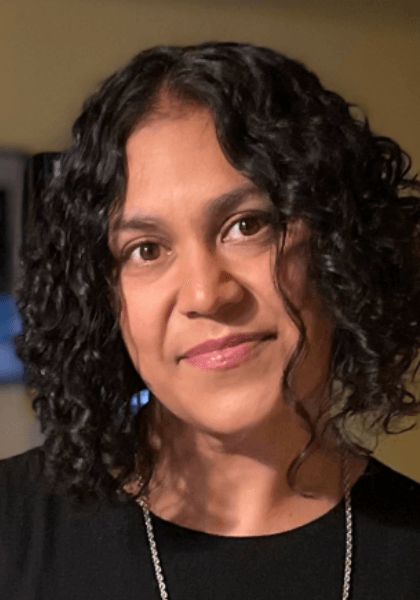
Natasha works with individuals who feel stuck in physical, mental or emotional suffering. She helps her clients get to the root of their pain to finally get relief and move beyond trauma, whether they knew it was there or not.
Natasha also leads in-person embodied dance sessions and wellness retreats to create spaces where we can all feel more human and allow individual and collective healing to happen.
SUBSCRIBE TO OUR WEEKLY THURSDAY NEWSLETTER

A weekly newsletter for people who are tired of understanding their patterns and still feeling stuck.