
Did you sign up for our weekly newsletter on 'From Lock to Liberation' yet? JOIN US HERE.
JOURNEY WITH KINDRED SOULS
Together, we'll explore the intersection of nervous system science, mental health, spirituality, and healing.
Grieving Certainty: Why Freedom Can Feel So Scary After Religious Deconstruction
Grieving Certainty: Why Freedom Can Feel So Scary After Religious Deconstruction
Listen to the conversation
What Happens to Your Identity When You Leave a High-Demand Religion
I opened my conversation with Audra by asking what happens to your sense of self when the belief system that defined you no longer feels true. Her answer was honest and immediate. She said your sense of self is shattered, and you don’t know where to begin, because your whole life you were told who you were and who you were going to be.
Identity Is Anything That Follows “I Am”
When I asked Audra to say more about identity, she gave me one of my favorite definitions I’ve ever heard. She said identity is anything that follows the words “I am.” For her, that once meant I am Mormon, I am a mother, I am a wife. It can also go deeper, into beliefs like I am worthy or I am enough.
Those statements shape how we feel, how we act, and what we believe. So when you walk away from a religion that filled in so many of those blanks, it can be really hard to figure out what goes at the end of the “I am.” Audra described feeling emotionally out of control and untethered, which makes so much sense when the deepest layer of who you are has suddenly gone quiet.
Why So Much Freedom Can Feel So Scary
The picture that came to me while Audra was talking was a ship without an anchor. She described it a little differently. She said there were many times after leaving when she felt like she had climbed a mountain and was standing at the summit, looking down at endless paths, when she was used to being told there was only one right way down.
That’s exciting and empowering, and it’s also completely unfamiliar. Our brains and nervous systems love what’s familiar, so all those new choices brought up fear of making the wrong one. Audra put it simply when she said that having choices is a good thing, it just isn’t familiar, and it took a lot of nervous system regulation for her to feel safe with them.
How to Tell the Difference Between Old Conditioning and What You Really Believe
One of the most practical parts of our conversation was how Audra learned to sort through her reactions after she left. Because she was living overseas at the time, she had some space to explore away from church culture and family. That gave her room to notice what came up when she tried things that used to be forbidden.
The Question That Changed Everything: “Is This Mine?”
Every time Audra felt that inner voice say “this is bad” or “this is a sin,” she stopped and asked where the feeling was coming from. Did she really believe it, or was it a conditioned response? She did this with everything, from her first cup of coffee to whether her kids could wear tank tops to whether she needed to find a new religion right away.
She admitted it was exhausting at first. But over time she learned to ask one powerful question with every decision. Is this mine, or is this an inherited belief that’s still running the show from my subconscious?
Why Guilt and Shame Stick Around Even When You Know Better
I see this all the time in my practice. People can catch the old conditioning and name it, and yet the guilt and shame show up anyway. Audra knows this one well. For about eight years, she said, she was throwing darts in the dark and pushing her big emotions down because she didn’t know what else to do with them.
Those buried feelings didn’t disappear. They came out as emotional overreactions and explosive moments that left her wondering why she had acted that way. That’s what tends to happen when we push feelings away. They find another way out, whether that’s reactivity, physical pain, or illness.
Using an Emotional Ladder to Feel What You Pushed Down
When Audra finally started working with a coach, she learned to sit with her emotions instead of burying them. She would notice where a feeling lived in her body, name it, and write it out. One tool that helped her was an emotional scale she credits to Abraham Hicks, with hopelessness at the bottom and joy and peace at the top.
If Audra was feeling guilt, she wouldn’t try to jump straight to peace. She would ask whether she could move one step up the scale and rewrite her sentence from “I feel guilt because” to “I feel doubt because.” With grief, she said it comes like a wave, so each time it came back she would see if she could move just one step further.
What this taught her was that emotions aren’t good or bad. In the church, anything besides peace, love, joy, and happiness was seen as sinful, so she was used to burying hard feelings and rushing toward happy thoughts. She came to see that emotions are information, and that feeling the whole spectrum is how she would really learn who she is.
Why I Don’t See Emotions as a Hierarchy
I want to add a little nuance here as a therapist. I love that this tool helped Audra start to feel emotions she had spent so much of her life suppressing. From my perspective, though, emotions don’t exist in a ranking where some are better than others. Anger isn’t worse than gratitude, and grief isn’t something we need to get past as quickly as possible.
Sometimes anger is exactly what we need to feel, and sometimes grief needs our attention. What matters most is building the capacity to notice and experience our emotions without judging them or trying to make them go away. Often it’s our relationship with the emotion that creates the struggle, and that’s where the lock happens.
The Apple Pie Moment: When Hidden Beliefs Come to the Surface
This is the story I haven’t been able to shake. About three years ago, Audra was in her kitchen on Thanksgiving, making everything from scratch, including an apple pie. She had been out of the church for eight years, but she was still living by an old definition of what a good wife and mom should do.
As she cut the apples, she felt really resentful. She doesn’t even like apple pie. She made it every year because it was her husband’s favorite, but he had never actually asked for it. So she decided to make her own favorite instead, and then her mind went completely blank. At 43, she had no idea what her favorite kind of pie was.
What’s Your Apple Pie?
I wonder how many of us have had our own version of that moment. We do something because we always have, because we think a good wife, mother, daughter, or friend would. Then one day we stop and wonder if we actually want to.
The question I find most helpful is this one. What do we predict would happen if we stopped? Would someone be disappointed? Would we feel guilty? What would that mean about who we are? These ordinary moments can reveal the beliefs that have been quietly running our lives.
Grieving the Life Unlived and Choosing What You Want Now
For Audra, the pie moment opened a door to what she calls grieving the life unlived. She started wondering what her life would have looked like if she hadn’t married at 20, if she had chosen the career she wanted, or if she had become a mom a little later. She realized she was living a life created by 20-year-old Audra.
That brought up some really big questions, including whether she would still choose her husband today, since they were both such different people now. She described feeling like a ping pong ball bouncing between stay and go. That’s when she reached out to a coach, because she realized this decision wasn’t going to be solved with a pros and cons list.
Rebuilding Your Life One Piece at a Time
When I asked Audra where you even begin picking up the pieces, her advice was clear. One at a time, and don’t do it all at once. She also found it more helpful to stop asking what her life would have been like and start asking what she wants now.
Her first focus was parenting, since her kids were 9, 11, and 13 when she left. The church had given her a detailed parenting blueprint, so she had to learn to tune in when her automatic answer felt tight. Learning reflective listening and meeting her kids in the middle deepened their relationships more than she ever imagined. Later came questions about her marriage and her career in education, which she realized she had chosen because it was the most acceptable job for a Mormon mom.
Poking Holes in Old Beliefs
Audra shared a tool she uses with herself and her clients. When a belief feels tight and you know it isn’t yours, start poking holes in it. Is it always true? Is there ever a time it isn’t? Can you think of a mom who sometimes puts herself first and is still a good mom?
From there, you look for evidence of a new belief that lets you take a deep breath, something like “a good mom takes care of herself, and then she’s more available for her children.” Audra also stressed choosing that new belief without judging yourself for the old one. She asks herself what her best friend would have said in those moments, and then she offers herself that same grace.
Growth Without Forced Gratitude
Audra described being able to look back and see how each step shaped her as a powerful part of healing, and it can be. I also want to be careful that we don’t create a new rule that says you have to feel grateful for painful experiences in order to heal.
We can grow from something without being grateful that it happened. We can find meaning while still honoring that some experiences were painful, unfair, or harmful. Sometimes healing looks more like letting ourselves acknowledge what we lost than finding a silver lining. Both can be true.
Your Body Is an Oracle
In her coaching, Audra uses NLP, imagery, EFT tapping, hypnotherapy, and somatic work. Many of her clients have never been asked where they feel nervousness in their body, and their first answer is often “what do you mean?” Learning to find a yes and a no in the body is brand new for a lot of women.
Audra said something I had never heard before and now can’t stop repeating. Your body is an oracle, and it can help you tune into what is yours and what is not yours. I’d add one layer to that. Our bodies can also respond to old programming, which is why learning discernment matters so much. Slowing down to ask what is actually happening right now is part of the work.
Grieving Certainty and Learning to Live With Not Knowing
My last big question for Audra was what surprised her most about what she grieved after leaving. She expected to grieve family. What she didn’t expect was grieving certainty. She used to have a clear path and an answer for everything, and suddenly she had to learn that it was okay to say “I don’t know.”
She said there were times she thought it would be easier to just stay, because there’s safety in certainty. I think so many of us struggle with the discomfort of not knowing, and it sits at the root of a lot of anxiety. What we don’t always see is that the alternative to uncertainty often means handing our freedom to someone else. Audra now feels comfortable not having every answer, and she was honest that it took a while.
How to Find Support After Leaving High-Control Religion
Audra’s message to any woman in the thick of this is that she isn’t alone. Whatever big feeling you’re scared to admit, someone else has felt it too. Audra waited eight years before reaching out for support, and once she did, she wondered why she had waited so long.
I also believe it really helps to work with someone who has specific training or lived experience with high-control environments. Audra shared that when she talked with friends who didn’t know the church, she ended up explaining the religion and her feelings at the same time, and eventually she stopped talking about it. Having someone who already understands the language, the family dynamics, and the depth of loyalty and guilt can make a world of difference.
You can find Audra at Mama Audra, where she offers a free masterclass called Five Shifts Every Former Mormon Woman Needs to Make, and on social media as Mama Audra.
WHERE TO FIND OUR GUEST
Meet Audra Phelps
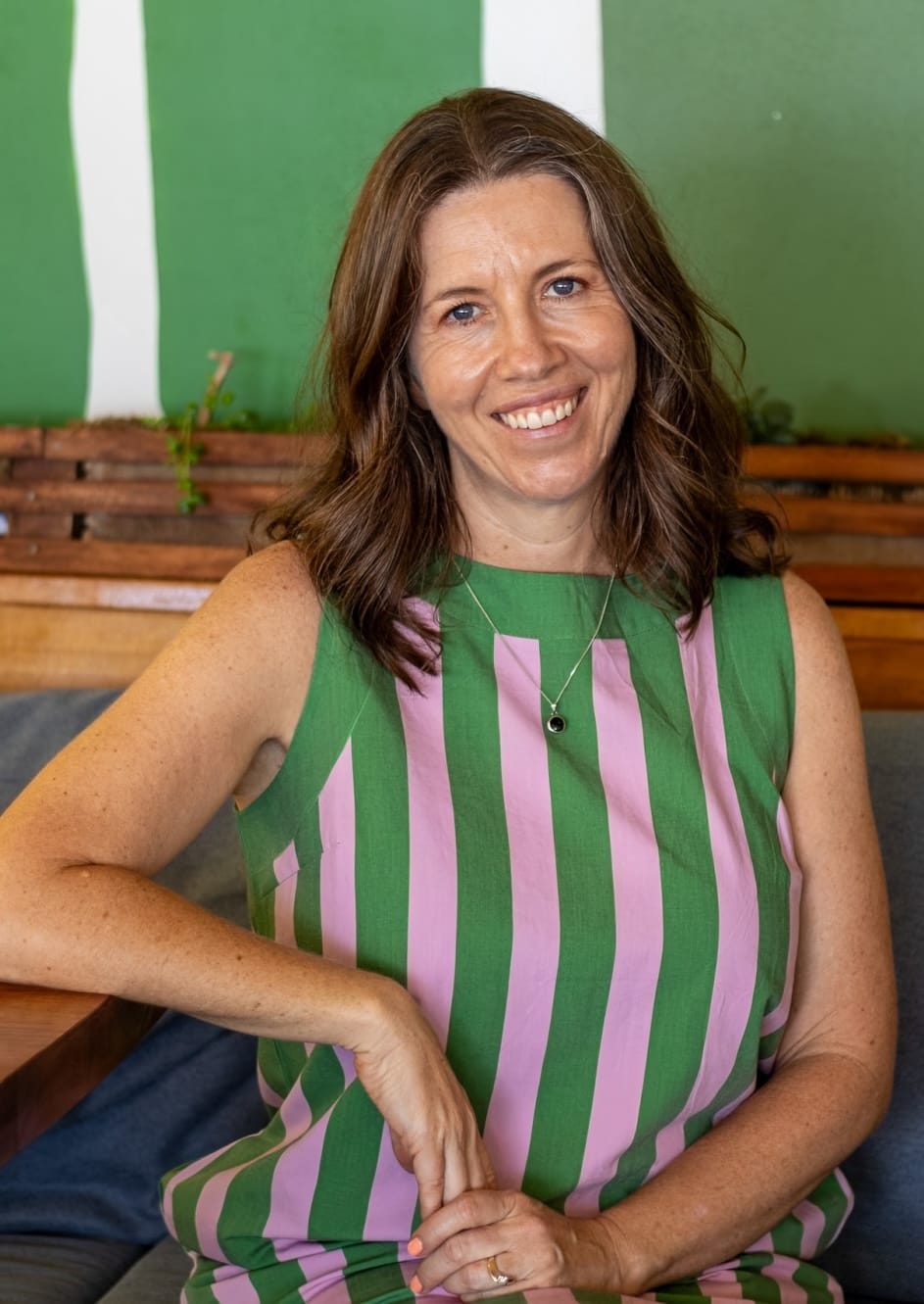
Audra Phelps is the founder of Mama Audra, where she helps women untangle old beliefs after leaving a high-demand religion and discover their own identity. She began her career as a high school biology teacher, moved overseas with her family to work in international schools, and has more than 15 years of experience in education and coaching.
Today she uses NLP, EFT tapping, hypnotherapy, and somatic work to support women through the grief, guilt, and identity loss that so often follow a faith crisis.
SUBSCRIBE TO OUR WEEKLY THURSDAY NEWSLETTER
A weekly newsletter for people who are tired of understanding their patterns and still feeling stuck.