Did you sign up for our weekly newsletter on 'From Lock to Liberation' yet? JOIN US HERE.
JOURNEY WITH KINDRED SOULS
Together, we'll explore the intersection of nervous system science, mental health, spirituality, and healing.
What Classical Tantra Really Means
What Classical Tantra Really Means
Listen to the conversation
Why Talk Therapy Wasn't Enough: A Somatic Healer's Path to Coming Home to the Body
I have interviewed a lot of guests on this podcast, and every so often, one of them says something that I keep turning over in my head for days. This week, that guest was Crystal Clear.
Crystal is a massage therapist, a registered yoga teacher, and a somatic bodywork practitioner. She is the founder of Sensora Sanctuary, a bodywork collective serving clients in Los Angeles, Orange County, and Texas. Her work sits at the crossroads of touch, nervous system regulation, and tantra, but before we ever got to her professional training, we ended up somewhere much more personal.
A Childhood That Started With Survival
Crystal was born with a tumor the size of a grapefruit in her stomach. Back in the 1980s, doctors did not fully understand how infants experience pain, so they performed open surgery on her while she was fully awake, with no pain medicine at all.
She cannot prove the long term effects of that surgery, but she does not need to. We already know from trauma informed research that medical trauma this early can shape a nervous system for life. On top of that, Crystal grew up in a home with two parents who had narcissistic patterns. She started therapy at four years old, which means she has been in some form of talk therapy for 40 years.
She told me something I have heard from a lot of people who grew up this way. Once you are done gaslighting yourself and pretending things were normal, most people think the answer is just to go find a good talk therapist. And that is true, to a point. Crystal said talk therapy kept her alive at certain moments in her life. She is not knocking it. But she also told me it was not enough on its own.
What It Means to Perform Your Healing
After leaving an abusive relationship in her early twenties, Crystal found yoga. She spent over a decade practicing Bikram yoga, done in a room heated past 100 degrees. She used the word performed to describe those years, and it stopped me in my tracks.
She said she pushed herself past what her nervous system could actually handle, because she believed pushing and enduring were proof of her worth. Her nervous system stayed on high alert for so long that high alert became her resting state. Even in the stillness at the end of class, her mind kept racing through her to-do list.
I think a lot of us know what it feels like to perform our own healing. Doing the right things. Saying the right words. Checking the boxes. But never actually landing in our own bodies. Crystal's turning point was learning the difference between understanding a pattern and actually feeling it change.
She has a phrase for this that I love. She calls it me-search instead of research. Her own healing became her curriculum, built over years of honest, sometimes uncomfortable self-examination.
What Classical Tantra Actually Means
I asked Crystal about the word tantra, because I think most people hear that word and picture something very different from what it actually is. Her training is in classical tantra, not the neo-tantra version that shows up in a lot of wellness marketing.
She broke the word down for me. Tan means to expand. Tra means tool. Yoga means union. Tantra is a tool for expansion, and it has ancient roots in both Indian and Tibetan traditions. Even practices like cognitive behavioral therapy trace some of their roots back to the same Buddhist mindfulness lineage.
In America, Crystal said, tantra has become highly sexualized. She was clear that tantra does include sexuality, but that is one small slice of a much bigger picture. Because there is no governing body for the tantra industry and no real barrier to entry, anyone can label a sensual massage as a tantra practice, even when the two are fundamentally different things.
The real heart of tantra, she said, is how much space you can hold. Can you hold space for your own pain the same way you hold space for your own joy?
The Body Holds the Answers the Mind Can't Reach
This might be the line from our conversation I think about the most. Crystal told me that the answers to all of the issues in the mind are in the body. She was not being poetic. She meant it literally.
When we are not in touch with our bodily sensations, she explained, we are not in touch with our own intuition. And when we are not in touch with our intuition, we do not have access to our own truth. All of it is connected. None of it works in isolation.
This is why her sessions are not just about talking things through. She is trained to notice micro shifts in a person's tone, breathing, eye movement, and the way they hold their hands. She told me it takes about 90 minutes in a session for someone's nervous system to actually fully arrive. Not their mind. Their whole nervous system.
Self-Abandonment Disguised as Love
One of the most useful things Crystal said all conversation was about a pattern she sees constantly in her clients, and in herself. Self-abandonment does not always look dramatic. Sometimes it looks like being the bigger person. It looks like explaining yourself for the tenth time. It looks like never letting yourself be anything less than gentle and accommodating.
She said self-abandonment can masquerade as love, and it quietly leaves you completely drained. Learning to notice your own edges, where you end and someone else begins, is part of what she works on with almost every client who walks through her door.
Inside a Somatic Bodywork Session
Crystal's sessions run three to four hours, sometimes five for returning clients. She told me most people can only stay fully present for about that long. After the bodywork itself, she brings clients to a vibroacoustic sound table, an FDA approved medical device that runs binaural frequencies through 200 amps of subwoofers embedded in the table.
She wraps clients in a weighted blanket and a weighted eye mask, and the table gently shakes their nervous system back down to earth. She described it as a tool that mimics what meditation is designed to do, bringing someone back to their breath instead of letting their mind run the show. Aftercare is optional, but she offers a follow up phone call the next day for anyone who wants it.
Why She Chose the Name Crystal Clear
Toward the end of our conversation, I asked Crystal about her name. Crystal Clear is her legal name now, and she did not choose it lightly.
She told me the real path of healing cannot be done in solitude. It is not about going up on a mountain and renouncing the world. Healing happens relationally, between people, and it takes real skill to show up cleanly in relationship with another human being. When she decided to take on the name Crystal Clear, she understood it as a kind of promise. Her own clarity becomes the environment her clients step into for their own transformational work.
What This Means for Your Own Healing
If you have done a lot of work on yourself already, therapy, journaling, reading every book you can find, and you still find yourself repeating the same patterns, Crystal's story might explain why. Insight is not the same thing as change. Understanding a pattern is not the same as feeling it shift inside your body.
As Crystal put it near the end of our conversation, this is the way out, is to go in.
You can hear the entire conversation, including her thoughts on the loneliness epidemic, working with neurodivergent and autistic clients, and what it actually looks like to hold space for someone in crisis, on this week's episode of The Spiritually Curious Therapist.
Where to Find Crystal Clear
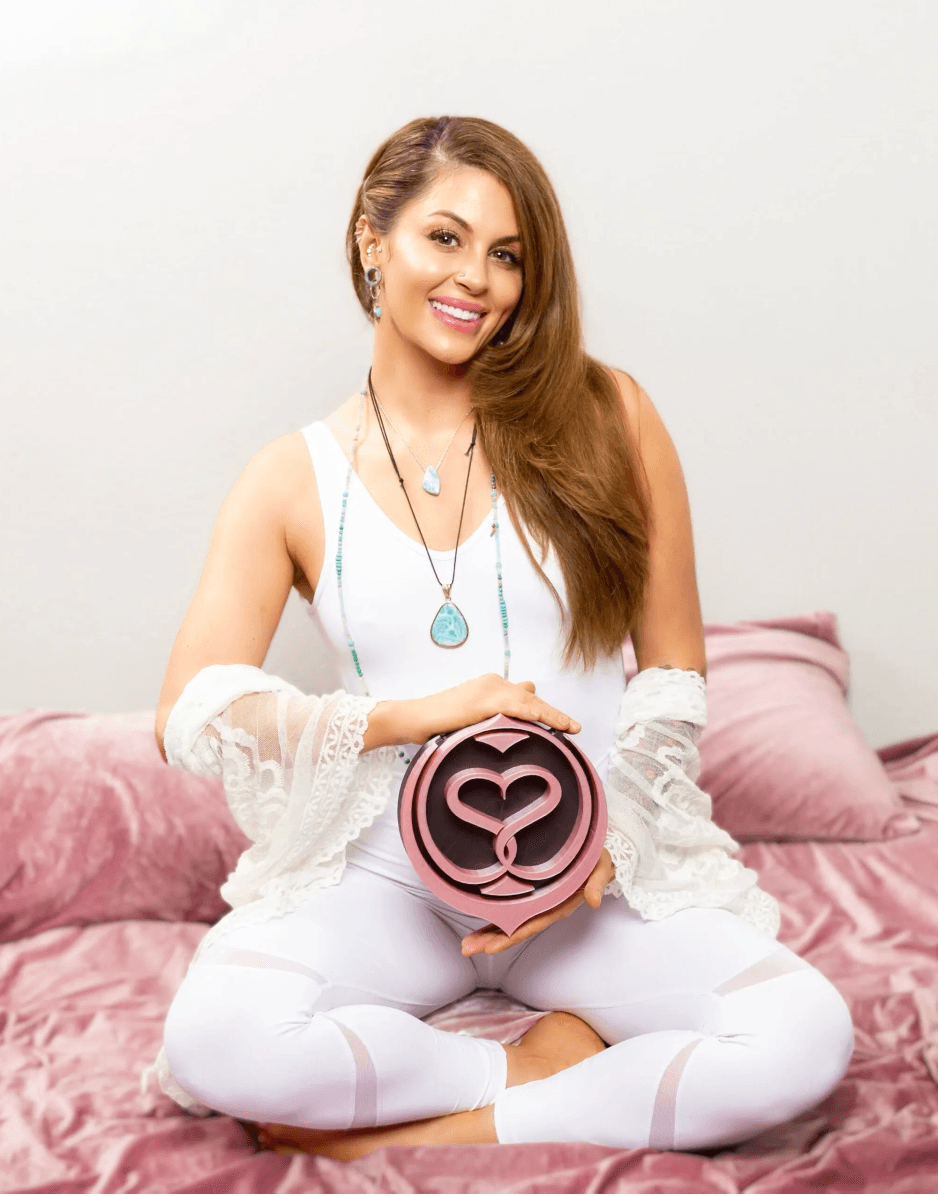
Crystal Clear is a massage therapist, registered yoga teacher (RYT 200, Yoga Alliance), and somatic bodywork practitioner working at the intersection of tantra informed touch, nervous system regulation, and embodied healing. She is the founder of Sensora Sanctuary, a somatic bodywork collective serving clients in Los Angeles, Orange County, and Texas.
Crystal is currently deepening her training through Relational Life Therapy with Terry Real, a certificate in somatic sexology at the Pacific Center for Somatic Sexology, and emotional release therapy certification with Pat Jackman.
SUBSCRIBE TO OUR WEEKLY THURSDAY NEWSLETTER
A weekly newsletter for people who are tired of understanding their patterns and still feeling stuck.