
Did you sign up for our weekly newsletter on 'From Lock to Liberation' yet? JOIN US HERE.
JOURNEY WITH KINDRED SOULS
Together, we'll explore the intersection of nervous system science, mental health, spirituality, and healing.
Body Hatred and Diet Culture: A Body Liberation Therapist Explains
Body Hatred and Diet Culture: A Body Liberation Therapist Explains
Listen to the conversation
Body Liberation Therapy: Why Nothing Was Ever Wrong With Your Body
Have you ever caught yourself grading your own body like it's a test? I have, and I'd bet most of us have, even if we never say it out loud. This week on The Spiritually Curious Therapist, I sat down with body liberation psychotherapist Paula Atkinson, and our conversation stayed with me long after we stopped recording.
We covered ranking, self-abandonment, diet culture, GLP-1 medications, and a mantra you can try today. I'll walk you through the big ideas here, and you can hear the whole thing on the episode. If food and body topics feel tender for you, please take this at your own pace.
What Body Liberation Means and Why It Matters
When I read through Paula's website, one word kept jumping out at me, and that word was liberation. So I asked her to tell me what it means to her. Her answer was clear, bold, and a little bit thrilling.
Paula calls herself a body liberation psychotherapist and activist. The belief she lives by is that everybody gets to do whatever they want with their body. She imagines a world where we stop ranking people by the shape of their body, and she says the idea that body shape tells us anything about a person's character has no truth in it. As she talked, I thought about my own years of going on and off a weight loss app, and how long I've been measuring myself against a standard I never picked.
Everyone Has Permission, Including You
People sometimes assume that a body liberation therapist must be against weight loss programs or medications. Paula told me that isn't true. She said she's against ranking humans by body shape, against systems that get rich by teaching people to hate themselves, and against the idea that every body can and should look the same.
Why We Rank Ourselves and Everyone Else
One of the first things Paula and I talked about was ranking. She believes we learn to do it very early, and it follows us into every part of life. Once you start noticing it, you see it everywhere.
How School Teaches Us to Grade Ourselves
Paula pointed out that we call it grade school, and that's right when we start grading ourselves and each other. She sees this constant ranking as one of the biggest sources of suffering we have. We rank how we spend our days, how we spend our time off, and even the meal we just ate.
There Is No Finish Line
So many of us tell ourselves that once we reach a certain goal, we'll finally be kind to ourselves. Paula says that day never comes, because there's always a new goal waiting behind the last one. I shared the old saying that comparison steals our joy, and she took it one step further. In the moment we compare, she said, we can't connect with anyone, including ourselves.
Scarcity Is a Story We Were Taught
Paula also talked about scarcity, the belief that there isn't enough to go around. In her view, eating problems grow out of that belief, because living on as little as possible starts to look like a virtue. I brought up the idea that our drive to be better may come from survival instincts, and she agreed with one big change. She doesn't believe scarcity is true, and she sees nature as proof that there is more than enough.
Is Body Hatred Really About Your Body?
I asked Paula this question directly, and her answer was no. What she said next made me think about the whole topic in a new way.
Paula sees eating disorders as a symptom of self-abandonment. She explained that many of us, especially women and other people who aren't straight cis men, are taught before we can even talk to distrust our feelings, our instincts, and our gut. She described deciding to stop hating her body as healing work that reaches back to her mom, her grandmother, and the long line of women who were taught to distrust their bodies.
Why We Give Up Ourselves to Stay Connected
This is where I brought in Gabor Maté, who talks about the tension between our need for connection and our need to be authentic. When those two needs collide, connection wins every time, and we give up pieces of ourselves to keep it. Paula said this fits what she sees. For centuries, women had to abandon their bodies in order to be chosen, and being chosen meant having a home, food, and a way to survive.
Your Body Is Nature, and Nature Does Not Lie
Paula reminds her clients that the body is a piece of nature, and she asks in what world we would trust anything outside of it more than the body itself. She tells them their body has never lied to them and has never betrayed them. She said she has let her own body down plenty of times, and her body kept taking care of her anyway. That kind of trust makes her much harder to sell things to, and I'd say that's a pretty great side effect.
Paula's Story: A Kid Who Was Told Something Was Wrong
Paula shared her story with real honesty, and I want to retell it with care. She was a bigger kid from the day she was born, and she told me she was healthy and active. She was on the dive team, she swam all the time, and she loved to dance.
Then the grown ups around her kept talking about her body. Paula said that every time an adult talks about a child's body without their consent, it's a violation. If you tell a kid they're defective enough times, she said, they will start to believe you. Once she was convinced her body was wrong, she quit the very things that made her feel good in it, because she felt she hadn't earned the right to enjoy it.
At sixteen she went on her first diet, and it grew into a serious eating disorder. On the outside she looked like she was doing great, and she said it felt like the cost of being loved. She got so sick that she needed residential treatment. Her parents were caught up in their own struggles, and everyone around her seemed to assume she was fine. I shared that people who over-function often ask for help without ever asking, and she told me she still finds it hard to believe people want to care for her.
Why Casual Weight Loss Talk Hurts More Than You Think
One moment in our conversation made my heart drop. Paula told me that the casual weight loss chatter at parties and work lunches is one of the things that bothers her most, and I understood why as soon as she explained it.
She said you never know who in the room has nearly died trying to be thin, or who has lost someone to an eating disorder. When we talk about dieting like it's a fun goal, we quietly support the idea that it was worth the risk. She even lost a friendship over this when a friend's partner couldn't stop talking about it around her. It's a small thing you can try in your own life. The next time weight loss talk starts up, change the subject.
Nothing Was Ever Wrong With You: Shame and Lived Experience
The phrase "nothing was ever wrong with you" runs all through Paula's website, so I asked her to say more. Her answer came right back to that bigger kid who loved to dive and dance.
Paula said shame is what stopped her from enjoying the things she loved. Once she felt she should be ashamed of her body, she couldn't enjoy it anymore. One of the most powerful ways she knows to fight body hatred is this idea: her experience of living in her body matters more to her than anyone's experience of looking at it. She said that for a lot of people, that's a revolution, and it shouldn't be.
I pointed out how much projection is tied up in all of this, and Paula agreed. She said every judgment we have about someone else's body says something about our own relationship with ourselves. She even made a popular meme that says no one who has ever criticized her body has had a relationship with food and their body that she admires.
Feeling Comfortable in Your Body at Every Age
We also talked about how bodies change over a lifetime, which is something I think about more as I get older. Paula reminded me that nothing in nature stays the same shape, not a tree, not a squirrel, and not a person.
She said the idea that we should look the same at 55 as we did at 25 is really just marketing. I shared that I've used a weight loss app on and off for about ten years, and I always seem to restart at the same place. I told her I wasn't sure if that meant I had body hatred. She asked how it felt, and I said it didn't feel like hate. It just felt like I wasn't comfortable.
I said there's a big difference between noticing you don't feel comfortable in your body and hating yourself because of how you look. Paula agreed, and she explained that feeling comfortable is about what's happening inside you, while body hatred comes from an outside idea of what bodies should look like. She told me her own body tells her what it wants and needs, and she trusts her more than anyone.
GLP-1 Medications and Body Image: What Paula Sees With Her Clients
We couldn't talk about bodies right now without talking about GLP-1 medications. Paula was clear that she isn't against them, and she has plenty of clients who take them for good reasons, like diabetes. She also told me she isn't a medical doctor, so please treat this as her view from the therapy room and check in with your own doctor.
Paula finds it fascinating that we were sold diets for generations, and now we're being sold a fix for the problems dieting can create. She has also seen something she didn't expect. Some of her longtime clients who were taught that their body size was a flaw of character have become angry after starting the medication, because they realized the shame was for sale all along. She thinks that anger is healthy.
I brought up the flat feeling some people describe, and Paula said clients sometimes use that exact word. She now asks about GLP-1 use at intake because it can affect mood. She also worries about the long term effects for people who don't have diabetes or a similar condition, since nobody knows yet, and she tells her clients that. Her bigger point is that she supports people making their own choices, and she wants them to make those choices with real information.
How to Stop Abandoning Yourself: A Simple Mantra to Try
When I asked Paula what she hopes listeners take away, she said she knows she gave us a lot to think about. So she offered one thing to hold onto. Almost all of our problems, she believes, begin when we abandon ourselves.
Here's the mantra she gives new clients: no matter what, I do not abandon myself. She says you can't abandon your body without abandoning yourself, and you can't abandon yourself without abandoning your body, because it's all one thing. Try it for a while, she said, and see how it changes your decisions.
She also shared a belief I loved, which is that infinite permission equals infinite choice. When you give yourself permission to eat what you want and be who you are, you get your choice back, because you're finally choosing from what you actually want. That connects to what I know about trauma, since choice is one of the first things it takes from us. Paula compared this whole process to clearing malware off a computer and getting back to factory settings, which made healing sound a lot less scary.
Listen to the Full Conversation on The Spiritually Curious Therapist
There is so much more in this episode than I could fit here, and I hope you'll listen to the whole thing. Paula and I even talked about doing a second conversation someday, so stay tuned.
If you've spent years in a tug of war with your body, whether it's about how it looks or how it hurts, my course From Lock to Liberation was made for you. You can learn more about it here.
If you're struggling with food or your body right now, please reach out to a licensed professional or someone you trust. You deserve support.
Where to Find Paula D. Atkinson, LICSW,
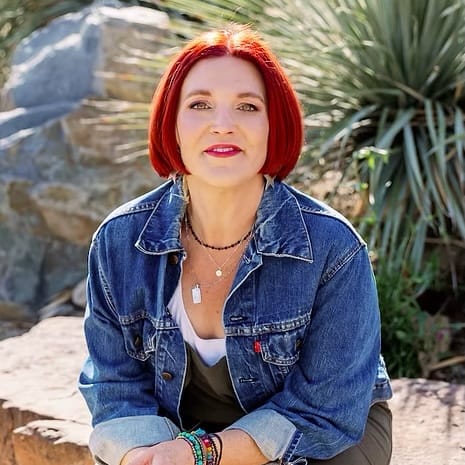
Paula D. Atkinson, LICSW, is a queer, liberation focused psychotherapist and body justice activist. For more than a decade she has helped people heal their relationship with food and their bodies, and she has taught a course on weight and society at George Washington University.
She is also a second generation yoga teacher, an author, and the host of the podcast What If Nothing's Wrong with You. You can find her at pauladatkinson.com and on Instagram at @pauladatkinson.
SUBSCRIBE TO OUR WEEKLY THURSDAY NEWSLETTER

A weekly newsletter for people who are tired of understanding their patterns and still feeling stuck.