Did you sign up for our weekly newsletter on 'From Lock to Liberation' yet? JOIN US HERE.
JOURNEY WITH KINDRED SOULS
Together, we'll explore the intersection of nervous system science, mental health, spirituality, and healing.
Intuition vs. Anxiety: A Therapist and a Soul Guide Unpack the Difference
Intuition vs. Anxiety: A Therapist and a Soul Guide Unpack the Difference
Listen to the conversation
There's a practice I've been sitting with since my conversation with Gwyneth Flack, and it's one of those things that sounds almost too simple until you actually try it.
Three words. "Is this mine?"
That's it. And yet, asking that question consistently might be one of the most transformative things a sensitive person can do.
Gwyneth is the author of Limitless: Transform Your Life with Intuition and Creativity, a transformational teacher, and a soul body alignment guide who has spent over 20 years helping people reconnect with their inner wisdom. Our conversation on The Spiritually Curious Therapist went deep fast, and I'm still integrating pieces of it.
You Were Born Intuitive. Then Life Happened.
Gwyneth grew up seeing people on two levels. The outside version, the polished or defended or performing version, and the inside version, the one full of brightness and creative energy and love. To her, this was just normal. She didn't realize it was something most people lose access to as they grow up.
She was four years old when she had a near-death experience. Rather than traumatizing her, it actually validated something she already sensed: we are more than just these bodies. There is more going on than the surface. That knowing became the seed of everything she would later teach.
But here's what made her path unique. Somewhere along the way, she recognized that being so intuitive also meant she was absorbing things that weren't hers. Fears. Worries. Emotional residue from the people around her.
She would feel anxious about things, and when she looked closely, she could trace those feelings directly back to her parents. Not her fears at all. Just fears she had picked up without knowing it.
If you are a sensitive person, a therapist, a healer, a caretaker, or someone who simply pays close attention to the people around you, this will probably land somewhere familiar.
What Intuition Actually Is (And What It Isn't)
One thing I wanted to get clear in our conversation was Gwyneth's definition of intuition, because this word gets thrown around in a lot of different ways.
For Gwyneth, intuition is our internal system for finding our deeper answers. The answers that experience and logic alone can't give us. It's different from the intellect, which holds all our learned knowledge, past experiences, and mental image pictures from everything we've lived through.
The intellect is always predicting. It's pulling from the past, creating associations, making meaning out of patterns. That is incredibly useful for certain things, but it can also trap us. It can make us think we know what someone else is feeling, what a situation means, or what choice we should make, all based on old information that may have nothing to do with what's actually happening now.
Intuition, on the other hand, is accessed in the present moment. In the pause. In the space between one thing and the next.
Gwyneth compared it to walking in nature. When you step outside and actually let yourself land in your senses, something shifts. You start to notice things differently. You start to receive instead of grab. That's what connecting with your intuition feels like.
The Difference Between Intuition and Anxiety
One of the most common questions I hear from clients, and one I brought to Gwyneth directly, is this: how do I know if what I'm feeling is my intuition or just anxiety?
This is a real and important question, and the answer is nuanced.
Sometimes what we experience as a "gut feeling" is genuine intuition. And sometimes it's a whole collection of outdated beliefs, past experiences, other people's fears, and nervous system patterns that have nothing to do with the present moment.
She's not saying one is always right and the other is always wrong. She's saying that the more you practice communicating with your body and your intuition on a daily basis, the easier it gets to tell the difference.
You build that discernment through small, consistent contact. Not by saving your intuition for the biggest decisions of your life and then expecting it to show up loud and clear when everything is on the line. That's not how it works.
What Sensitive People Are Actually Doing (Without Knowing It)
Here's where it gets really interesting, and where I think this conversation speaks directly to anyone in a helping role.
Gwyneth introduced this idea that sometimes when we read people intuitively, we aren't reading who they actually are. We're reading the energy that's stuck on the outside of them. Residue from how others have treated them, projected onto them, or what they themselves have been carrying for years.
So we might walk into a room and feel something heavy, and we think we know what it is or who it belongs to, but we might just be picking up layered energy that has nothing to do with the actual reality of the person in front of us.
This is why grounding matters so much. When we're grounded in our own bodies, anchored in our own senses, clear on where we end and where others begin, we're in a much better position to know what's actually ours.
Why Helpers and Healers Need This Most
I asked Gwyneth directly: what do you say to someone like me? A therapist who might be in sessions for eight hours in a day, constantly holding space for other people's pain?
Her answer was simple and practical. Start with grounding. Every day. Not as a spiritual aspiration, but as a physical, embodied practice.
Getting grounded means actually being in your body. Noticing your feet on the floor. Feeling the chair beneath you. Tuning into your senses. Telling your nervous system: I'm here. I'm safe. I've got this.
The more regularly you come back, the easier it gets. And the easier it gets, the less likely you are to walk out of a session carrying weight that was never yours.
Giving It Space Instead of Fighting It
One of the things Gwyneth said that I keep returning to is this: what we resist tends to persist. So instead of fighting a difficult emotion or trying to make it go away, she teaches people to give it space.
Notice it. Name it. Ask if it's actually yours. And then instead of pushing it away or letting it take over, just create room for it to move through.
She described it like a drop of oil in a vast ocean. When you give something space, it stops taking up the whole picture. It comes back into proportion.
The Decision That Starts Everything
She said that all of this, the grounding, the intuition, the awareness, the releasing, it starts with a decision.
A quiet, intentional choice: I would like to be grounded. I would like to know what my body needs. I would like to be friends with my body.
Not a dramatic overhaul. Not a new routine you'll abandon in two weeks. Just a willingness to begin paying attention.
Where to Find Gwyneth
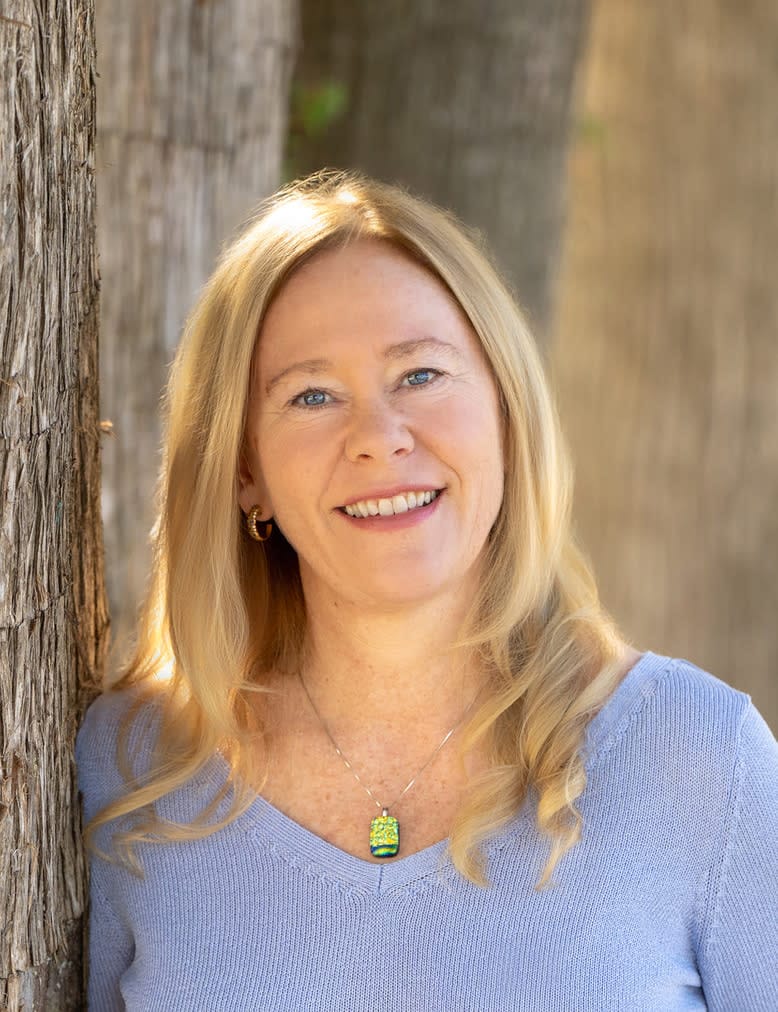
Gwyneth is the author of Limitless: Transform Your Life with Intuition and Creativity, a transformational teacher, and a soul body alignment guide who has spent over 20 years helping people come back to themselves.
You can connect with Gwynneth here.
If this conversation is calling to you, you can listen to the full episode of The Spiritually Curious Therapist wherever you get your podcasts.
And if you want to go deeper with Gwyneth's work, her book Limitless is available on Amazon and through local bookstores. Her four-part online class on intuitive tools starts May 2nd at gwynethflack.com.
SUBSCRIBE TO OUR WEEKLY THURSDAY NEWSLETTER

A weekly newsletter for people who are tired of understanding their patterns and still feeling stuck.